In which Annie (high school teacher, mother of two young girls and a younger boy) and her aunt Deborah (children's bookseller, mother of two young women in their 20s) discuss children's books and come up with annotated lists.

Thursday, August 9, 2012

One's own drummer

Dear Annie,

I promised to revisit the gay-themed books for kids topic one more time, mostly because I wanted to mention two books which sort of fit, but maybe not quite...
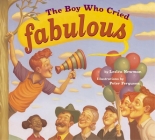
The Boy Who Cried Fabulous
is by Leslea Newman, who seems to have written about half the books about gay parents -- starting with Heather has Two Mommies.  She's not one to be coy about a topic, but it's interesting what she's written here:
When Roger started out for school,
his mother set a simple rule.
 She said, "Now Roger, you go straight --
 straight to class, and don't be late."
 . . .
but then he came upon a store,
its windows full of lovely clothes
so colorful that Roger froze,
then clapped his hands in fits of glee 
and shouted out in ecstasy:
"What a fabulous coat,
is it silk or wool?
What a fabulous bell,
can I give it a pull?
What a fabulous door, 
does it open wide?
What a fabulous store,
can I come inside?"
He admires the clothes, the customers, the day, the world.  Everything is "fabulous" (although "simply divine" sneaks in there too).  Roger has such enthusiasm for every distraction that he's constantly late wherever he goes.  His parents (one mom, one dad) are very irritated.  The next day as the family goes to town together, mom and dad ban the use of the word fabulous.  Although he's trying hard, Roger just can't toe the line, but his exuberant descriptions sprout new adjectives: marvelous, wonderful, dazzling, glorious, etc.  The scene becomes crazier and crazier as Roger ends up dancing on tables then leading happy townsfolk in a parade, complete with elephant ride.  A moment of suspense ensues as he turns to see his parents' reaction.
"We've never, ever had such fun,
and you are the world's most fabulous son!" 
It's fun, it's a good story, written with panache.  Maybe it's about following your enthusiasms, maybe it's about parents accepting their gay sons.  The differing interpretations feels a bit like The Lion the Witch and the Wardrobe, it's a wonderful magical tale, and some also see it as carrying a Christian message with a clear crucifixion allegory.

note the bird
Another excellent character bucking his family's expectations is Liam, star of
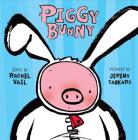
Piggy Bunny
, by Rachel Vail, illustrated by Jeremy Tankard of Grumpy Bird fame.  Liam is a piglet who wants to grow up to be the Easter Bunny: he practices hopping, eats salad and tries to deliver eggs.  His parents point out that he's "a terrific piglet" (nice adjective choice) and they love all his sweet piggy attributes. 
"You are perfect," said Liam's dad, just exactly the way you are."
"Just exactly the way I am," said Liam, "is like a piglet who is going to be the Easter Bunny."
Then Liam's grandparents visit and Grandma bucks the family attitude.
"They just have the imagination of a kumquat, the lot of them."  She shook her large head.  "Go put on your Easter Bunny suit, Liam.  Then they'll see."
Turns out he doesn't have one.
Liam's grandpa smiled gently.  "This is the kind of problem" he whispered, "that is called fixable."
They go to the internet to solve the problem.  When it arrives, the suit is itchy and doesn't quite fit right, but when he looks in the mirror,
looking back at him, was Liam, the Easter Bunny.  
A happy piggy.

This is an enjoyable book on many levels: it's funny, it's a believe-in-yourself story, and the author (in a very nice discussion with the illustrator) even calls it subversive. One of my co-workers pointed out another interpretation.  Julian, who used to be Nicole, read it through with a huge smile and said, "This is me."  Liam, the transgender piglet.  It's his current staff pick.

Love,

Deborah


Tuesday, August 7, 2012

Sisterly

Dear Aunt Debbie,

Your lovely post about sisters in picture books made me think immediately of a couple of new additions to our bookshelves, which aren't technically about sisters, but have very much a sisterly feel.

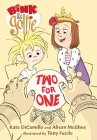
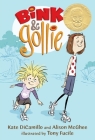
I'm talking here about Bink & Gollie and its sequel, Bink & Gollie: Two For One, by Kate DiCamillo and Alison McGhee, illustrated by Tony Fucile.  I mention the illustrator right off the bat because these books are so illustrated as to feel almost like graphic novels, though their structure is more early-reader: each book contains three stand-alone stories, loosely linked.

Bink and Gollie are best friends: Bink is the small, wild-haired blonde; Gollie the tall, thin, and hyper-articulate brunette.  You can imagine how easily my own tall, brown-haired Eleanor and smaller, blonder Isabel see themselves in this pairing.  There is no mention of either girl's family; though they are clearly kids, they seem to live in small individual houses close to each other.  Bink's house is classic one-room-house-shaped, while Gollie's is a far more modern structure, spare of furniture, perched up in the top of a tree.  The setting feels a little like the houses of the various animals in Winnie The Pooh, an impression that grew on me as I noticed each girl pretty much makes and eats only one thing (peanut butter sandwiches for Bink, pancakes for Gollie).

The stories in the first book involve individual desires and ultimate compromise: Gollie detests Bink's new brightly-colored socks, and refuses to make her pancakes until she takes them off; Gollie is on an imaginary adventure climbing the Andes Mountains, but Bink keeps disturbing her when she wants to be alone; Bink gets a new fish and spends so much time caring for him that Gollie gets jealous.  Very sister-like, in the ins and outs of negotiating play together.

What this summary misses is the pleasant loopiness of the dialogue, powered by Gollie's slightly formal tone and vocabulary and Bink's straightforward responses:

"Bink," said Gollie, "the brightness of those socks pains me.  I beg you not to purchase them."
"I can't wait to put them on," said Bink.

They refer to themselves as "marvelous companions."

In the second volume, Bink and Gollie visit a state fair, where Bink tries to throw balls to win a giant donut, and ends up hitting the guy running the stand; Gollie attempts to recite a poem at a talent show and is stymied by stage fright; and both girls go to see a fortune teller. A similar sense of sisterly support permeates these stories as well.

Love to your big sisters from my little ones,

Annie


Sunday, August 5, 2012

Celebrating sisterhood

Dear Annie,

Yesterday was Mona's 21st birthday.  She had asked for her sister for her birthday, so we flew Lizzie from Boston to San Francisco to celebrate with her.  They're used to birthdays together --

this was Mona's 7th birthday (Lizzie was 8).

I'm breaking from the current discussion to celebrate sisterhood in children's literature.  We've done a lot of that, so a lot of these are links.

David McPhail's Sisters celebrates the positives and negatives with a list:
One liked to wear two different colored socks.
One didn't like to wear socks (or shoes) at all.
One liked baseball.
The other found it boring.
[and on the other hand...]
Both sisters like to help bake cookies
and to play in puddles.
And a pile of leaves was never safe with those sisters around.
In Sheila Rae, the Brave by Kevin Henkes, the big sister is fearless:

But when she calls Louise a scaredy-cat and sets out on a new route home, Sheila Rae becomes hopelessly lost.  Louise has been secretly following her and pops up in time to lead Sheila Rae home.
When they reached their own yard and the gate was closed behind them, Sheila Rae said, "Louise, your are brave.  You are fearless."
"We both are," said Louise.
And they walked backwards into the house with their eyes closed.


Big Sister and Little Sister
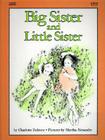
, by Charlotte Zolotow features a little sister who finally has had it with being told what to do, so she hides in tall grass in a meadow.  The big sister searches fruitlessly for her, and ends up so worried that she sits down and cries, prompting the little sister to reveal herself and take care of her big sister for the first time. 

And where would any sister stories be without Frances and Gloria, Rose and May-May (of the Golly Sisters -- two of children's literature's best sibling bickerers), and Ramona and Beezus (link is to a particularly sister-ish excerpt).

I love the fun, the rivalry, the resentment, the admiration and love that permeate these sister stories.  What am I leaving out?

We could go on to older fare -- The Hunger Games at one end of the spectrum, or Jane Austen at the other.  But that's another day.

Happy Birthday to you Mona!

And love to you, Annie.

Love,

Deborah

Saturday, August 4, 2012

Gay marriage, political and non-political

Dear Aunt Debbie,

Visiting my parents last week in Manhattan, the girls and I stopped in at Bank Street Bookstore, one of our favorite independent children's bookstores anywhere.  Imagine my surprise when the first display to hit my eyes as I walked in the door was a selection of books about gay marriage and families with gay parents!  Maybe there's something in the air.

The display included a few of the books you've recently written about: And Tango Makes Three, Donovan's Big Day, King and King, and Monday is One Day, which I hadn't seen before, but enjoyed.

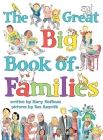
In the same vein of books aiming to be inclusive of all different kinds of families, there was also The Great Big Book of Families, by Mary Hoffman, illustrated by cartoonist Ros Asquith.  On each two-page spread, this book focuses on a subject -- holidays, where people live, pets, who makes up a family -- and then provides text and drawings to illustrate as many options as possible.  It's nicely multicultural, and includes families with gay parents.  On skimming, I found the text a little didactic, but the overall message of inclusiveness was nice.

Then there were two books which took on the subject of gay marriage in different ways, each beginning with a child's negative reaction, and ending happily, one in a totally non-political context, and one which makes it clear that the fight for gay marriage is a civil rights issue.

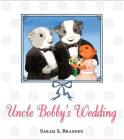
In Uncle Bobby's Wedding,by Sarah S. Brannan, the characters are all anthropomorphized guinea pigs.  Chloe has a close relationship with her Uncle Bobby (some sweet scenes of them playing together outdoors), and is upset when she learns he's getting married.  The nice thing about the book is that the gender of Uncle Bobby's fiance, Jamie, is never the issue, and in fact isn't remarked on at all.  The family is clearly supportive of the wedding, and Chloe's reaction is due entirely to her worry that she won't have as close a relationship to Bobby once he has a husband.  Before the wedding, Bobby and Jamie spend quality time together with Chloe, and she comes to love him, too.  There's a nice line about the two of them planning to have kids of their own, but still having a special relationship with Chloe.  Chloe demands to be their flower girl, and the wedding is a success.

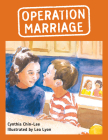
Operation Marriage, by Cynthia Chin-Lee, is set in California in the few months in 2008 when same-sex marriage was legal there, just before the passage of Proposition 8.  It's based on a true story about a pair of kids -- the older sister, Alex, narrates the book -- who push their two moms to get married legally amid the campaigning for and against Prop. 8.  Alex's best friend, Zach, tells her he can't be friends with her anymore because her parents aren't really married, and his father says that two women can't be married.  Alex and her brother Nicky decide that the way to fix this is to make their moms' union legal, and they go home and begin "Operation Marriage" to encourage Mama Kathy and Mama Lee to marry under California law: they play the wedding march, and make a wedding program to give their mothers.  The moms are very sweet -- their initial reaction is to say, but of course we're married, and break out the videos of their commitment ceremony.  After some talking, however, they're convinced.  Alex and Nicky get new wedding clothes, and the family has a small, warm, civil ceremony.  Even after Prop. 8 is passed, Alex feels like her mothers are truly married.  And Zach and his mom show up at the door to apologize for letting the issue divide the friends.  It's a nice combination of realistic, political, and hopeful.  Reading it, I felt like it would make a good historical picture book in the future, dramatizing the last throes of the fight against marriage rights for all.  Let's hope so.

Love, Annie

Wednesday, August 1, 2012

Gay parents: part of the crowd

Dear Annie,

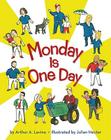
Arthur A. Levine, best-known as the Scholastic editor who brought Harry Potter to the U.S., is also a gay dad and a sometimes-author.  His
Monday is One Day
combines two themes we've explored. One is there-are-many-types-of-families; the other is working parents.
The hardest part about going to
work is being apart from you.
Let's count the days till we're both at
home with a special thing to do.
He then lists the weekdays, counting them off until the weekend when kids and working parents get more face time with each other.  Each page has a different family, including different races, single parents, grandparents, and two dads.  It's a wonderfully loving book.

Levine, ever aware of the financial pressures in publishing, is quoted in a five year-old blog post about controversies over several of the books we've been discussing:
"I'm hyper-alert in bookstores looking for the book that might include our family," Levine said. "I'd buy anything that remotely reflected us, partly because I would want to make a vote with my pocketbook. I want to say, 'Whoever you are in that publishing house who pushed this through, I am supporting you.'"

Then there's
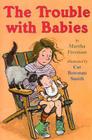
The Trouble with Babies
by Martha Freeman.  It's an early chapter book (which I haven't read, have been trolling the internet for good stuff) about a girl who's just moved to a new neighborhood with her mom and stepdad.  She befriends the boy next door, who has two dads.   The plot seems to center on her settling in to the new situation, rather than on the kid's dads: they're just part of the setting.

I'm going to toss out another Levine quote here, and come back to it next time:
"Ten percent of the children's book readership, at least, will grow up to be gay or lesbian," he said to AfterElton.com. "Wouldn't it be nice if their first exposure to the idea that there are gay people in the world isn't when they're teenagers — so when little Johnny falls in love with that really cute, brainy boy in his computer class, he's grown up with the idea that it's not unusual and there's nothing wrong with that."
So are there picture books about young kids who are gay?  A few get presented that way.  Stay tuned for my next post, which will also address a delightful book that could be about a transgender child.

Love,

Deborah

Monday, July 30, 2012

More gay-inclusive picture books

Dear Aunt Debbie,

Now we're starting to get a good list together.  I'm interested to find A Different Dragon, and more books that include gay and lesbian parents without that being the only focus of the book.  We enjoyed And Tango Makes Three and King and King a couple of years ago -- time to get them out of the library again, I think.  While I don't have further suggestions at the moment of books I've read with the girls, I've done a little searching around and found a nice annotated list and a few books that seem worth following up on.

The list is Gay-Themed Picture Books for Children, written by a research-loving librarian who also includes picture books about kids born from donor eggs or sperm.  A number of the books here do seem like One Issue Books, but there's a wide variety, and tags along the sidebar to help you navigate.  And I hadn't thought before about incorporating books about donor offspring as well.

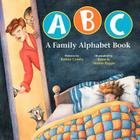
Two books by Bobbie Combs incorporate same-sex (and multi-racial) parents into scenes illustrating letters of the alphabet and counting.  ABC a Family Alphabet Book provides a word for each letter, and a sentence using the word:

A is for Awake.
Every morning, I am the first one awake in our house.


L is for Lunch.
We always pack a picnic lunch when my moms take me to the beach.

The writing seems a little flat, but the concept of the book worth checking out.

123 a Family Counting Book is sadly out of print (that's the Alibris link), but the reviews I've found of it say the illustrations are spectacular -- full of really interesting things to count, and again incorporating same-sex parents into the scenes rather than making them the focus of a story.


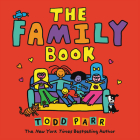
Todd Parr, writer and illustrator of roughly 3000 brightly-colored picture books, includes same-sex couples in The Family Book, along with single-parent families, families with adopted kids, and other possible constellations.  While I haven't read this one, I'm familiar with The Grandma Book and The Grandpa Book, which are also pleasantly inclusive -- each contains a picture of a grandparent zooming around in a wheelchair, among other things.  Both Isabel and Eleanor like to identify which of their grandparents best fits each page ("Papa has a wheelchair!  Lala likes to sew things!").  I find Parr's work to be a little neon and a little boring for my taste, but I can see why kids respond to it.

Finally (at least for now), there's the out-of-print Lucy Goes to the Country, by Joseph Kennedy, which follows a rambunctious cat getting into all kinds of adventures when her owners -- a gay couple she refers to as her two "Big Guys" -- bring her to a backyard barbecue where she chases a dog up a tree and causes general mayhem.  The fact that her owners are gay isn't referenced directly in the text, but is clearly part of the background in the illustrations, and there is a mention of two women and their daughter in the text as well.

I'm feeling a little better about what's out there, but this is clearly a genre that's ripe for more authors to write in....

Love, Annie


Sunday, July 29, 2012

Two moms/two dads

Dear Annie,

Wow.  Two and a half years, 460 posts, and we haven't done two mommies/two daddies books.  We're making up for that now.

I'm quite fond of Mommy, Mama, and Me which you mentioned, and
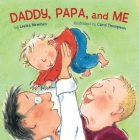
Daddy, Papa, and Me
, also by Leslea Newman.  They're simple, not exceptionally artful, but enthusiastic and aimed at the very young:
The mom version is about lots of stuff to do in a day; the guy version is a bit more play-centric: "Daddy wears a shiny crown./Papa dresses like a clown."

I don't know A Tale of Two Mommies, which you ask about, but Vanita Oelschlager has also done A Tale of Two Daddies, with the same headless parents issue.

For a more contemporary on-the-issues book, Newman has written Donovan's Big Day.  We follow a six-or-so year-old boy as he gets up and gets ready for a big event (puts on a suit all by himself, clips on his new tie).  Grandparents, cousins, aunts and uncles all are there to help, but no parents.  They get to what appears to be a church, say hi to lots of grownups, and Donovan follows his younger cousin down the aisle.  Then his aunt gives him his cue:
He handed one shiny gold ring to Mommy.
He handed one shiny gold ring to Mama.
He stood next to them without saying a word
while they slid the shiny gold rings
onto each other's fingers,
looked into each other's eyes,
said mushy things to each other,
and smiled and laughed and cried.
Big hugs and kisses all around at the end.

In comments on your last post, Beth mentions two quite wonderful picture books:


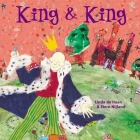
King and King
, by Linda de Haan and Stern Nijland (translated from the Dutch), also ends with a marriage.  A prince's mother demands that he find a suitable princess to marry.  He auditions an array of not-very-fascinating women, but one of them brings along her brother, Prince Lee.  The electric look that passes between the princes when they meet lets us know what will happen next.  They fall in love, marry, and live happily ever after.  There's a sequel in which they adopt a child -- it's okay but not up to the standards of this one.

  And Tango Makes Three by Justin Richardson and Peter Parnell tells the true story of two Central Park Zoo male penguins who paired up and built a nest together.  Zookeepers gave them an egg to hatch, and they raised Tango, their daughter:
The illustrations help to make this a very sweet building-a-family story.   The wikipedia entry on the true story seems to say that all three of them are still living at the Central Park Zoo.  One of the dads has since paired with a female, and when Tango grew up, she found a female partner.

As you point out, it's great to find books that don't scream, This Book is About an Important Issue.  There's one more that I've been told about by a few customers but haven't been able to get for the store. 
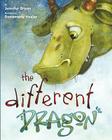
The Different Dragon
by Jennifer Bryan is about a boy with two moms.  The story focuses on one of the moms telling him a bedtime story about a dragon.  The boy and mom create the story together, changing it as they tell it.  The story focuses on the dragon and the process -- the fact of two moms is a given, but not a focus.  Has anybody out there read this one?

Any other two moms/two dads good books?

Love,

Deborah