In which Annie (high school teacher, mother of two young girls and a younger boy) and her aunt Deborah (children's bookseller, mother of two young women in their 20s) discuss children's books and come up with annotated lists.

Monday, March 28, 2011

Guest blog: Gay YA

Dear Aunt Debbie,

How can I have missed Diana Wynne Jones?  Her name is familiar to me, but honestly, I'm not sure that I read a single one of her books as a kid.  Clearly someone who needs to go on my list now.
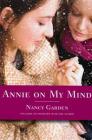
In expanding our discussion of YA books, I checked in with my friend Emily for her advice about YA books about gay teenagers.  Her first thought was Nancy Garden's Annie on My Mind, which I read in grad school and found...okay.  It was written in 1982, and feels a little dated; worth reading for being one of the first lesbian YA books with a (sort-of) happy ending, but nothing I wanted to reread the heck out of.

Emily contacted her friend and book maven Tatiana, who responded with an email so comprehensive and awesome that I immediately asked for her permission to turn it into a guest blog.  And here it is:

Okay, here's what I got.

First, graphic novels:
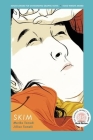

Skim
by Mariko Tamaki & Jillian Tamaki, super beautiful book about a HS Asian girl who falls in love with her female teacher.
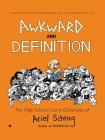
Ariel Shrag has a series of four books called
Awkward, Definition
, Potential and Likewise that are basically a diary of each year of HS and her budding lesbianism (but oh my god is her girl-dating brutal to those of us who have dated emotionally brutal girls).

Book books:

Basically the holy grail of lesbian YA books is Julie Anne Peters.  She writes a ton of them and they're way better than what a lot of other people are putting out.
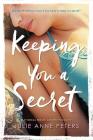

Keeping You a Secret
is the best one she's got.  She also has Luna, which is another transgender book, focusing on a girl and her budding M to F brother.  There's Far From Xanadu and Rage, which are more standard girls falling for unattainable girls stories, Rage with some domestic violence thrown in (very good, but issue-y).  There's Between Mom and Jo which is lesbian mom divorce told by son. 

Then there's a bunch of books by other authors that I though were just "eh", but I'll mention them anyway. Kissing Kate, Empress of the World, Crush, Girl Walking Backwards. These are much more your standard, "hey I'm in love with a straight girl I can't have," maybe I'm gay stories.  Except for Crush which, if I remember correctly is more "hey, I think I'm in love with a straight girl, I'm really not, I'm just a confused adolescent and my book is boring." 

Anyway, back to the good stuff. 

Dare Truth or Promise
, budding lesbians in New Zealand with some religious questions thrown in for good measure.  Very good.  There's
The IHOP Papers
, which I think is about an under-20 gay girl, but Ali Liebegott is a Michelle Tea protege so there's a lot of sex drugs & rock and roll.  Speaking of Michelle Tea, she wrote a YA book.  Rose of No Man's Land.  Not bad, very Michelle Tea-esque though.

If you want boys, I have a few recommendations I picked up from someone's teacher friend. 
Boy Meets Boy
and Finlater, Finlater I think is speficially about non-white gay boys.  Haven't read either of them yet, but will be getting around to them eventually (I have a soft spot for girls, obviously).
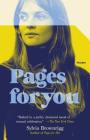
Moving on to books that I don't consider YA but have young protagonists, there's the absolutely insanely wonderful
Pages for You
, which is about a girl who moves off to college and falls in love with her TA.  Also Stir-Fry, another start-of-college hey-I-like-girls in Ireland book.

There's anything by Helen Oyeyemi, she is Nigerian and grew up in England, all her protagonists are girls in high school or younger and her books are sheer poetry.  Really amazing. 
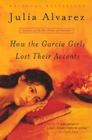
There's the classic How the Garcia Girls Lost Their Accents which my mom handed to me when I was young much the same way older lesbians handed me Rubyfruit Jungle when I was young (I say don't bother with RJ, it's just not worth it, Dorothy Allison did it better and with way way more talent than the cat lady)

And I think that's it for now, but I'll keep my eye out.

:)

Thank you, Tatiana!  

Anything to add, especially on the gay boy front?

Love, Annie 

Sunday, March 27, 2011

Diana Wynne Jones

Dear Annie,

Diana Wynne Jones died last week.  She fits right into our discussion of teen lit books that survive the test of time.
Diana Wynne Jones has a unique record of producing books you can't forget. Her intelligent, imaginative brand of fantasy is, at root, down-to-earth – heroes win humanly, by acknowledging their weaknesses and playing to their strengths, and by behaving nicely to other people and giving them the benefit of the doubt even when they appear to be revolting. The fact that the heroes in question might be nine-lifed enchanters with power over space and time is incidental.
This quote is from an excellent blog entry in The Guardian by Imogen Russell Williams. She wrote it almost two years ago, but it stands as a memorial appreciation.  Jones wrote, among other things,  Howl's Moving Castle, The Dalemark Quartet, Dogsbody, the Chrestomanci series, The Tough Guide to Fantasyland, and my favorite:
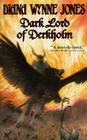
Dark Lord of Derkholm
.

Derkholm is a very funny send-up of a lot of fantasy cliches.  It's set in a world in a universe parallel to our own.  The world has magic in it, but is basically a fairly quiet agrarian society.  Mr. Chesney, from our world, has found a way to get to it, and to coerce residents to follow his bidding.  He runs a high-priced tour business for people from our world who want to see a dramatic magical world.  He forces the residents to stage battles, enchant farmhouses into complex castles, and generally make the place feel like a medieval fantasy world to entertain the tourists.  When Derk, a likable slightly muddled sorcerer who specializes in animal husbandry, is told he has to be the Dark Lord and run this year's Disney-esque production for Mr. Chesney, he sets out to figure out how to break Chesney's magical hold on the world.  It leads to riotously funny plot twists

Jones does families so well.  Derk's children are both humans and griffins.  He and his wife have some tension between them which leads him to worry constantly that she's bored with him, and the siblings all bicker with each other.  Everyone bumbles through many situations.  Jones studied at Oxford during the 50s, attending lectures by both C.S. Lewis and J.R.R.Tolkien (this according to wikipedia).  So at one point a minor character -- a very scruffy dwarf -- shows up, named Galadriel. "Derk had been wondering, ever since he discovered this, what Galadriel's parents had been thinking of."  And there are elves: elongated, elegant, aristocratic.  In one scene, a battered Derk arrives back home to be enthusiastically greeted by his flying pigs (he engineers a lot of flying animals), when he realizes a delegation of elves is waiting for him:
The effect on the elves was peculiar. The one with the circlet gaped and stood like a statue. His right hand was out, with its long, long index finger pointing stiffly at Ringlet [flying pig]. Derk would have been afraid he was trying to turn Ringlet to stone or something, except that the other five elves were falling about with laughter, crowing joyfully, slapping their elongated thighs, and hugging one another, as pleased as the pigs were. Finally, the laughing five swung the elf with the circlet around and hugged him, too, at which he joined in their laughter and began slapping the others on their backs. Old George, coming in hot pursuit of the pigs, skidded to a stop in the doorway and stared. Elves just did not behave like this normally.
   "Forgive us, oh my lord!" gasped one of the five lesser elves. "Talithan, my prince, has this moment seen his prophecy come true, and we are witness to it."
   "Yes, truly, my lord," said Prince Talithan. He was panting with emotion, and tears were running from his great greenish eyes. "Pray forgive me. I must tell you that my brother long ago went adventuring to our neighbor world, where Mr. Chesney has him a prisoner, thus forcing all elves to do his will. And when my father lately was sorrowing at this and saying that surely one day my brother must escape and come home to us, I answered him bitterly and scoffingly, saying, 'Yea, that day will come when pigs do fly!' for which reason my father grew angry and sent me to you, to become the Dark Lord's minion. And here, where I come, behold! Pigs fly!" He pointed again at Ringlet, who was still on the table.
"Well, I've been breeding them with wings for years now," Derk said. "Perhaps you shouldn't build your hopes on it."
This isn't a pivotal scene in the book, but it has a lot of the spirit of the whole thing.

Jones created complex worlds with a light touch.  And she did it with an affection for her characters that transfers well to the reader.

One last quote, this from Neil Gaiman, who was a close friend of hers:
She's a wonderful author to read aloud, by the way, as I discovered when reading her books to my kids. Not only does she read aloud beautifully, but denouments which seemed baffling read alone are obvious and elegantly set up and constructed when read aloud. "Children are much more careful readers than adults," she'd say. "You don't have to repeat everything for children. You do with adults, because they aren't paying full attention."
Love,

Deborah

Friday, March 25, 2011

Teen lit to pleasantly obsess both boys and girls

Dear Aunt Debbie,

Nice Publisher's Weekly piece!  I enjoyed your quotes.  It's always good to read an article that implies that the selling of real live books has a future.

I'm finding this conversation on YA lit for girls vs. boys fascinating.  I threw it out there to my network on Facebook, and got some interesting responses as well.  I'm going to summarize here (with few links, so I can get to bed some time tonight), and then focus in on three books which, in my experience, appeal across gender lines.

Male friends mentioned: Dungeons and Dragons rulebooks (tongue in cheek, but two more echoed it), Louis Lamour, Robin McKinley's The Hero and the Crown (dragon-fighting heroine -- I loved this one too), Isaac Asimov's Foundation series, Sherlock Holmes stories, Edgar Rice Burroughs's Tarzan books, the Oz series, the Lloyd Alexander Black Cauldron series, Susan Cooper's Dark is Rising series, the EarthSea Trilogy by Ursula LeGuin, Agatha Christie, Ian Fleming, Gregory McDonald's "Fletch" mysteries, and Judy Blume.  This last bunch come from my friend Mark (husband of excellent guest blogger Cyd), who wrote about Blume and YA realism several years ago here, in the Times.

Female friends mentioned: Lois Duncan, Christopher Pike, Sweet Valley High (I admit, I read them all too, borrowing them from friends in junior high), Gone With the Wind, A Wrinkle in Time, Judy Blume, Nancy Drew, Jane Eyre, Constance C. Green's A Girl Called Al series, and Richard Peck.

Definitely more sci-fi going on on the male side, but I was heartened by the amount of crossover. 

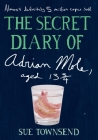
Jeff's cousin Megan wrote that she, her husband, and her sister all loved a book I hadn't thought about in ages: The Secret Diary of Adrian Mole, aged 13 3/4, by Sue Townsend.  It's the first book in a British series I discovered on my one childhood trip to England, and found massively funny.  Adrian Mole is a neurotic teenage boy, a fabulous unreliable narrator who keeps a diary recounting his obsessions and daily humiliations.  It's set in 1981-82, and I remember a great deal of focus on Charles and Diana's wedding.  I also read and loved the first sequel, The Growing Pains of Adrian Mole.  There are a bunch of other sequels following Adrian into adulthood.


My friend Zara mentioned another great junior high school love of mine.  Aside from Madeline L'Engle, the only science fiction I got truly obsessive about were Douglas Adams books: The Hitchhiker's Guide to the Galaxy trilogy (which is five books long), and the Dirk Gently books.  Adams's brand of offbeat, deadpan humor made me dissolve into laughter, and I devoured the stories of hapless Arthur Dent, off with his towel in space with Zaphod Beeblebrox.  The only gender discrepancy I remember in the Adams fan base of my youth was that I had a soft spot for So Long, and Thanks for All the Fish, the only book with a love story, while my male friends thought it was a little weaker.  It's also the one where Arthur learns the secret of flight: you fall, and forget to hit the ground.

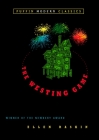
Finally, there is The Westing Game, by Ellen Raskin.  Raskin calls her book "a puzzle mystery": the six apartments in brand-new Sunset Towers on the shores of Lake Michigan are rented out to families chosen for reasons which are only explained by the book's end.

Who were these people, these specially selected tenants?  They were mothers and fathers and children.  A dressmaker, a secretary, an inventor, a doctor, a judge.  And, oh yes, one was a bookie, one was a burglar, one was a bomber, and one was a mistake.  Barney Northrup had rented one of the apartments to the wrong person.

The empty Westing mansion looks down at them from up on the north cliff -- Sam Westing disappeared fifteen years before.  Then, on Halloween evening, smoke begins to rise from the chimney....

The cast of characters is decently diverse -- the judge is a black woman, the family who owns the top-floor restaurant are Chinese -- and one of the protagonists is a spunky 13-year old girl named Turtle Wexler.  The mystery is such that I didn't fully understand the ending the first time I read it (probably at age 10 or so), but loved it anyway.  It rewards rereading.

So I read it, and reread it, and then for years I forgot The Westing Game, until one day a year out of college, shortly before I was leaving the Boston area to move to Seattle for a year, I noticed it again on the bookshelf of a male friend I was just getting to know better.  He happened to have two copies; he had been obsessed with the book himself; he gave me one of them.  Reader, I married him.

Love, Annie

Wednesday, March 23, 2011

Teen lit, continued

Dear Annie,

I'm writing this from my brand new iMac: my first new computer since the girls were in middle school (or maybe before?).  The screen is very laaaaarge.

I too am loving this current thread.  The people who posted on your last entry are fascinating.  The Ender books and Tolkien are still steadily popular.  I recommend Ender and sequels a lot.  In addition to the ones you mention, I'm quite fond of Ender's Shadow, which replays the events of Ender's Game from the point of view of Bean, a minor character in the first book.  Very Rashomon.  And Ender, like Tolkien, appeals across gender.

Orson Scott Card is a prolific and interesting writer.  He's a Mormon, has done a series of novels on women of the Bible, a longer alternate history series set in the American west (the continent is divided into more countries, greater Native American presence, and magic), and Enchanted, which I really want to read. It mixes Sleeping Beauty, Russian folklore, and time travel.  I heard a chunk of it on book radio the other day: good sense of humor too.

Is anyone out there into the Piers Anthony Xanth novels?  They're another item on my I-should-read-these list.  Fantasy novels with a fantastic map of the magical world.

At Child's Play we organize fiction a little differently from most stores.  Between the ages of Early Chapter Books and Teen/YA/Adult we have two major categories which run parallel in terms of reader age, but separate by subject.  One side of the aisle is Science Fiction and Fantasy; the other side is more reality-based Fiction.  (A small Mystery section lives around the corner.)  We set it up that way back when we started the book section because Steven, my boss, felt fantasy books were really important to a lot of teenagers.  This was in the days before Harry Potter had transformed the children's publishing industry.   The belief was that fantasy worlds with their complex but knowable structures and rules are a comfortable escape from the messier more out-of-control adolescent reality.  Steven talks about fantasy worlds in books requiring more involvement on the part of the reader because those structures and rules need to be understood to grasp the plot and characters.

Child's Play, by the way, made it into the industry press this week: a nice piece by Publisher's Weekly.

Love,

Deborah

Monday, March 21, 2011

The male equivalent of YA chick lit?

Dear Aunt Debbie,

You and I are clearly on the same wavelength.  I was planning to write about Lois Lowry tonight, and then on Friday to talk about my conversation with Jeff on the same exact topic.  (I also have in the pipeline recommendations for YA books about queer teens and multicultural YA books -- this thread is inspiring a lot of great conversations in my life.)  So I'll save Lowry for another day, and get straight to the question: what is the boy version of YA chick lit?

When I asked Jeff what he read obsessively as a teenager, he didn't have an exact equivalent to the stable of authors I remember loving.  The closest, he said, was probably The Lord of the Rings, which led him deep into Tolkien's other works, the ones where he made up more than 17 complete languages and societal histories.   Tolkien definitely provided Jeff with immersion in another world.

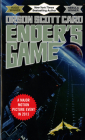
Then there's Ender's Game, by Orson Scott Card.  We have Jeff's old beaten-up copy on our main bookshelf; I read it a few summers ago and really enjoyed it.  Human society is at war with an alien race (the Buggers), and Ender is one of a number of kids bred to be a super-intelligent soldier.  He's taken from his family to a training camp where he plays intensely difficult war games (including battles in zero gravity) with a group of similarly talented kids, under the tutelage of a group of adults.  Ender is the boy version of some of the heroines we've been writing about: very smart, lonely, and sensitive.  The major difference, of course, is that he's fighting battles rather than engaging in more domestic questions.

*Spoiler Alert -- skip this paragraph if you don't want to know the end of the book.* In the climactic scene, Ender acts as the general in a giant video game simulation in which he successfully eradicates his opponents.  Turns out that it wasn't a game: he has, in fact, led the eradication of the Bugger race.  The triumph is tainted with intense guilt, which is explored in the sequel, Speaker for the Dead.  Orson Scott Card is extremely prolific, and he's written many, many other books, some of which also involve Ender and Ender's world.

From what I remember of Ender's Game, it probably feels a little dated in the way that some of my favorite old chick lit does -- but is that necessarily a bad thing?  Is it current teenagers who are determining that they don't want to read late '80s books, or is it publishers?

So there's a start -- historical war, historical war in fantastical places with newly-created languages, and science fiction video game-type war.  I'd love to hear from other people on this subject.

Love, Annie

P.S. This is our 200th post.  Pretty awesome, no? 

Sunday, March 20, 2011

Guys read...

Dear Annie,

Mona went through a Paula Danziger phase during the Domestic Fiction years.  I myself haven't read much of her, although one of my favorite book titles of all time is  Everyone Else's Parents Said Yes . Her Amber Brown books have always sold better for me than the older chapter books you talk about. I sometimes wonder if books talking about real-life situations age a little faster than some others. Most of the books you talk about were written late 70s/early 80s. Do the assumptions and language still speak to people born at the turn of the century?

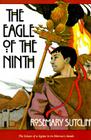
I've been thinking about taking a brief break from Chick Lit.  I wanted to toss a question at you about your spouse.  What was he reading in middle school?  Does he have a L'Engle equivalent?  For Bob it was Rosemary Sutcliff, a wonderful British historical novelist.  She wrote an excellent trilogy about the Roman occupation of Britain, which starts with
The Eagle of the Ninth
(recently turned into a not-so-good movie, I think).  Her books cover British history from the Bronze Age on up to at least the 18th century.  I'll do a longer entry on her at some point (or will ask Bob to do a guest blog).  The combination of good writing and immersion in historical settings were what attracted Bob to her books.  Any guys out there who had/have seriously favorite books from middle school on up?  Or women who want to talk about their spouses' favorites?

All of this was on my mind tonight when a friend came to dinner with his quite remarkable 14 year-old twins.  We kicked around the names of a lot of books and authors.  It turned out that the book that the brother was totally in love with was Grapes of Wrath. 

Love,
Deborah

Friday, March 18, 2011

First loves: Paula Danziger

Dear Aunt Debbie,

I like Mona's working definition of chick lit.  Looking it over, I'm pleased to see that one of my other favorite YA authors fits quite nicely into the criteria Mona lays out.

I returned over and over to Paula Danziger's novels because I had so much fun reading them.  Most of them focus on truly dysfunctional families, and my favorites have ugly-duckling heroines with low self-esteem who turn out to be more interesting (and attractive to the right sensitive, intelligent guys) than the people who seem at first to be more popular.  Danziger's supporting characters are also awesome.

The Danziger book I reread more than any other is The Pistachio Prescription.  In it, 13-year-old Cassandra (Cassie) Stephens feels like an unattractive outsider in her attractive but dysfunctional family (she is flat-chested, and has mousy brown hair and asthma.  Boy, could I relate!).  Cassie finds solace in eating red pistachio nuts; hence, the title.  The action takes place just before and during Cassie's first year of high school.  Her parents are fighting like crazy, she and her perfect older sister don't get along, her younger brother is a sweetheart and collects animals, and her friends convince her to run for freshman class president.  There is a cute boy involved.  Cassie is a sarcastic, angry, funny narrator.  I don't have the book on me right now, so I'm stealing this excerpt from a nice review on the blog the stacks my destination:
I personally think all math teachers buy their clothes with the chalk dust already on them. Either that or they buy them clean and immediately step up against a blackboard, like the way lots of kids step all over brand-new sneakers to get them to look old. I personally think that math stinks. I can’t do it. Artists shouldn’t have to take it if they don’t want to. Meyerson the Messy is too fast. If I ever need to know anything about the dumb subject, I can use a calculator or hire someone.
   In history class, we have to write about “The American Who Means the Most to Me Historically.” Definitely one of the dippiest assignments I’ve ever gotten. I write about Lizzie Borden. 
My second-favorite Danziger book is her first novel, The Cat Ate My Gymsuit.  The heroine, Marcy Lewis, is overweight and not particularly popular.  She doesn't want to change for gym in front of other people because of her weight, so she makes up excuses not to participate (there's the title).  Her father is verbally and emotionally abusive to her, her mom, and her brother -- Danziger goes for the gut with the dysfunctional family stuff.  Marcy's life gets better when she connects with a fantastic and somewhat unorthodox English teacher, Ms. Finney.  There is a cute, sensitive boy.  The drama comes when Ms. Finney is suspended from teaching because of her refusal to say the Pledge of Allegiance, and Marcy is caught up in the fight to protest her dismissal.  Marcy gets more vocal and sure of herself, even standing up to her father about it.  Ms. Finney is reinstated, and then promptly resigns because of the atmosphere she'd be returning to.  Marcy is crushed -- another good exploration of a teenager working through understanding the disappointing actions of an adult she's seen as a perfect role model.  There's a sequel, There's a Bat in Bunk Five, in which Marcy's romantic relationship continues, Ms. Finney returns, and Marcy works for the summer as a C.I.T. at sleepaway camp (action during the summer!).

The primary thing I returned to Danziger for was pure enjoyment of her writing -- her narrators' sarcastic, self-deprecating tones, the combination of romance and humor.  Looking back on her books, though, I wonder if I was also attracted to the grittiness of the family problems she incorporated.  There aren't easy answers in her books -- parents get divorced (I also read, and enjoyed, The Divorce Express, about two girls who become friends riding  the bus from one parent's home upstate to the other parent's home in the city); new relationships are kind of awkward and don't quite work as well as you might hope.  The endings are happy for the heroines, mostly, but they're almost always bittersweet.

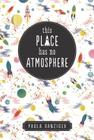
The one other Danziger book I returned to multiple times goes against most of what I've said above.  I don't know why I liked it so much, but a huge amount of the plot and details have stayed with me, so I must have read it a ton. This Place Has No Atmosphere is set in 2057.  14-year-old Aurora is pretty and popular and very happy with her life -- until her parents decide to move the family as settlers to the moon!  She is removed from her social life!  She must limit herself to 3-minute showers!  There are no cute boys!  But wait, there's one kind of nerdy guy who maybe isn't so bad....  It is a silly book.  It is chick lit.  And it's a really fun read.

Love, Annie