There's so much demoralizing going on about government funding. I don't understand how we can all agree that education is crucial to the future of the country, then cut its funding. I must say I'm kinda fond of the slogan your mother is pushing (echoes of Grandpa Frank, rest his soul): "Son of a bitch! Tax the rich!"
And as long as we're talking about family, I got a lovely call from cousin Kate (Astoria, Oregon) tonight just as dinner was going on the table. She was standing in a bookstore in need of a consultation on what to buy for the children of a family she's visiting. Dinner had to wait.
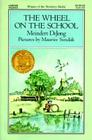 She was looking for books for three kids: a pre-schooler (maybe 4 years old), a first-grader, and a fifth grader. We started with the fifth grader. I rejected The Magician's Elephant by Kate DiCamillo: tries too hard to be profound, but ends as a parable that didn't work for me. Kate introduced our family to
 The Wheel on the School, a wonderful Newbery winner by Meinert DeJong. The children in a one-room schoolhouse set out to find a wagon wheel to put on the roof of their school (we're in 19th century Holland here) so that cranes will build nests in their town. Each child goes on a separate adventure, but the exceptional nature of the book has to do with three generations in the town all becoming involved. There are two climactic scenes -- both involving the ocean and dikes -- that always make me wonder why this hasn't been turned into a gem of a movie, preferably by a small British studio.

But the bookstore in question didn't have it. Kate has such a good knowledge (albeit a bit rusty: her daughters are in their mid 20s) of classic children's literature. I suggested
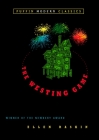
The Westing Game by Ellen Raskin, a classic and engaging mystery, as you have pointed out. We had a winner.
 On to the little kids. We kicked around a few, then the Frog and Toad books came up. The only question there was whether to give them to the first grader to read on his own, or to the pre-schooler to be read to. There Kate was in the early reader section, which is where the Frog and Toad books are usually shelved, and she spotted some Fox books.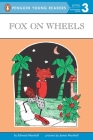
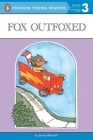 One of the many enlightened policies of the progressive school Lizzie and Mona went to for the early grades was to use the Fox books as the introductory reader in first grade. Fox is an endearingly rebellious adolescent with whom any first grader can identify. He's just straightforwardly funny, through a dozen or so books. The byline on the cover of the Fox books is Edward Marshall, which might lead you to believe (erroneously) that they're not by the great James Marshall, author of the George and Martha books and the Miss Nelson books, among others. There was a dispute with a publisher, and Marshall sold the Fox books to someone else, using his middle name for a byline, saying Edward was his cousin. There's a fun anecdote about that, which you can discover here.
So the verdict was Frog and Toad as a read-aloud for the four year-old. And a couple of Fox books for first grader. A good time was had by all.
Love,
Deborah