In which Annie (high school teacher, mother of two young girls and a younger boy) and her aunt Deborah (children's bookseller, mother of two young women in their 20s) discuss children's books and come up with annotated lists.

Sunday, September 12, 2010

Before the fall...

 Dear Annie,
Once there were two towers side by side. They were each a quarter of a mile high, 1,340 feet.  The tallest buildings in New York City.
 So begins Mordecai Gerstein's tribute,
The Man Who Walked Between the Towers
, the tale of Philippe Petit's tightrope walk between the towers in 1974, before the World Trade Center opened.  
He looked not at the towers, but at the space between them and thought, what a wonderful place to stretch a rope.
It's a picture book which tells kids the story of Petit's feat. He's a man who wants to do something because he feels it's fun, and he's willing to overcome many obstacles to make it happen.  This includes shooting an arrow from one tower to the other to start running the cable, hours of pulling heavy cable across, and then defying police who demand he come down.  The illustrations put you there.  As he starts across, we see:
And then, closer:
One could fall into the page. Then perspective shifts to the point of view of those watching from below.

The Man Who Walked Between the Towers was published in 2003, and adults can't help but think of September 11 when they read it. This book is not trying to explain September 11 to small children, although it acknowledges that the towers aren't there any more.   What it does is celebrate the life of objects that are now gone, rather than focusing on their death.  It acknowledges absence, but remembers a good yarn from an earlier time. It concludes:
Now the towers are gone. But in memory, as if imprinted on the sky, the towers are still there. And part of that memory is the joyful morning, August 7, 1974, when Philippe Petit walked between them in the air.
Every two or three months, a customer who I really like comes to the store and buys another hardcover copy of this book.  Once she bought two, so that she'd have an extra copy if she needed it.  She and her kids are so fond of the book, they give it to friends fairly frequently. She has an I-love-this-book intensity when she talks about it, because it's meant so much to them as a family.  I used to stock only the paperback, but lately, I've made sure I have two hardcovers on the shelf too, for her, or possibly someone who received the book from her.

Love,


 Deborah

Friday, September 10, 2010

September 11th, in graphic novel and play

Dear Aunt Debbie,

Tomorrow is the ninth anniversary of September 11th, and as always happens at this time of year, I find myself thinking about it a little more than is probably healthy.  Tonight I've gone farther and done some serious rereading, both of the play I worked on with my students in the months following the World Trade Center attack and, appropriately to our conversation, of a September 11th-related graphic novel.
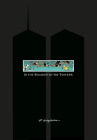
Art Spiegelman's In the Shadow of No Towers is a burning, furious cry from a brilliant and political cartoonist.  Spiegelman (author of the extraordinary Holocaust memoir/parental biography Maus) lives in Lower Manhattan, and on September 11th he watched the towers fall.  The book is a series of large-scale color pages, originally printed in a German newspaper, which draw on comic strips of the early 20th century and combine a wide variety of styles.  In the second half of the oversized book, Spiegelman reproduces some of the original strips which inspired him.

The pages are heterogeneous and complex, Spiegelman's attempts to make sense of his own anger and loss.  He rails against the Bush administration and what he sees as the cynical political use of the country's intense reaction to the attacks.  Perhaps this isn't the right place to write about this book: it's not a comic for kids.  But for older teenagers, with the right context, it could be a disturbing and fascinating read.

One of Spiegelman's pages depicts him and his wife, Francoise Mouly, running toward the high school where their daughter Nadja had just begun her freshman year in order to find her and take her home.  That school, Stuyvesant High School, is where I've taught since 2000.  (Nadja was in my Writers' Workshop class her junior year.)  On September 11th, I was one of the teachers evacuating the building along with our 3000 students.
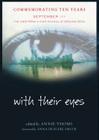
In the aftermath of the attacks, after we returned to the building, I worked with a group of Stuyvesant students to create a series of interview-based monologues which became the play with their eyes.  Our inspiration came from the work of Anna Deveare Smith, whose plays Fires in the Mirror and Twilight: Los Angeles showed us how powerful the words of everyday people can be in conveying the complexity of community tragedy (in her case, riots in Crown Heights and L.A.).

Ten student actors interviewed 23 members of the Stuyvesant community -- students, faculty, and staff.  They recorded these interviews on audiotape, transcribed them word for word, including all the "like"s, "and"s, and "um"s, and arranged them on the page like poetry, with line breaks to indicate pauses.  The actors edited the transcriptions into monologues, and then performed in the character of the people they had interviewed.  The book reproduces all of these monologues, along with pictures of the student actors (taken by the immensely talented Ethan Moses, who was a senior at Stuyvesant at the time): 
Chantelle Smith as Anonymous Male Custodian
Catherine Choy as senior Owen Cornwall
I am obviously not an impartial reader here: from rehearsing these monologues over and over, editing the book, and watching other performances of the play by high schools and even a couple of repertory companies in the last several years, I know many sections by heart, and can hear the voices of the students who created each role.  Still, it's been a while since I sat down to reread the whole play.

Anna Belc as English teacher
Katherine Fletcher
One of the things that makes this form so powerful is that it is a collection of stories, and so can represent multiple and conflicting viewpoints: the intense anger of senior Max Willens, who felt his neighborhood was invaded by tourists who didn't belong in New York but snapped pictures of the wreckage; the bubbly freshman Katie Berringer talking about the pluses and minuses of having to hold classes in another school until the building could reopen; the Dining Hall worker talking about how her religious faith helped her through.  Anna Deavere Smith writes about how everyone, given the chance to talk, will say something which is poetry.  In the case of these interviewees, processing the attacks just a few months later, this was true.  Their voices came through so clearly.

Christopher Yee as sophomore Kevin Zhang
I've heard from classes who have read this book and students who have performed the play that hearing the actual words of kids their own age about what it was like to be so close to Ground Zero on September 11th made them understand the day differently.  The tiny details -- a sandwich left in a locker when students evacuated, gone moldy by the time we returned -- aren't necessarily what you think about when you think of a day as fraught with tragedy as this one was.  But they were part of the reality too.  It's important to remember.

I hope your weekend is peaceful.

Love, Annie

Wednesday, September 8, 2010

More great graphic novels

Dear Annie,

Yes! I sell comic books!  Most of them are Graphic Novels these days and they come in many layers of complexity, reading levels, and quality.  We recently expanded our graphic novel section -- I still find some of it beyond me (don't know if I'll ever figure out manga, although I try).  So today I'll only talk about three.


American Born Chinese is great, and it was such a lovely moment when it won the Printz Award for YA books a few years back. You probably already know The Arrival, by Shaun Tan (which Indie Bound doesn't seem to list, so the link is to the author's site) but especially with your student demographic (many first and second generation immigrants, right?) it would fit right in.  It's a stunningly beautiful wordless book which puts the reader inside of the immigrant experience in a fantastical world where everything is just, well, different. Here, for example, is the harbor where the main character arrives after leaving his family behind:

All is strange to him: he can't read the designs on signs, the food is unfamiliar, he doesn't know where he's going.  But other people -- usually other immigrants --  help him out.  He has come from a world of poverty and hunger, symbolized by the shadows of dragons we see in the city he left.  His new friends describe to him why they fled their homes, the most disturbing image being this one:
One can linger long over every page.  There's tons to think about.  I never understood some of the elements in the story (why did they have those animals in the baskets?), but that can be part of the immigrant experience too: you never entirely get the new culture.

Then there's
Smile
, out this year.  It's a memoir by Raina Telgemeier about her years of oral surgery and orthodontia following a bad fall after a Girl Scout meeting.  At the same time, she's going through middle school with difficult friends and hard social situations.  She finally comes out of it all satisfactorily, but it's a sometimes painful ride that feels very emotionally spot-on.  Raina endures clueless doctors who seem so true-to-life I found myself remembering the orthodontist's office from my childhood -- not to mention all the people we dealt with through Mona's orthodontia and jaw surgery. 

For the younger set, a starter chapter book/graphic novel: 
Travels of Thelonious by Susan Schade and Jon Buller. It's the first in The Fog Mound series, a post-apocalyptic fantasy for the 8 to 12 year-old crowd.  Buildings exist, but no people.  Animals talk, and the ones who live where people used to live wear clothing.  The book is both a chapter book, with pages with a normal type layout, and then it breaks into comic book format for four or five pages, then back to regular type.  The story follows Thelonious, a chipmunk from the country, as he comes to the big city and finds friends to help him:


Thelonious wants to find out if the old legends about humans running the world are true.  He and friends go on an odyssey that appears to have concluded with the third book, but in this era of sequels, one can never tell..

Love,

Deborah

Monday, September 6, 2010

Graphic novels: for emerging readers and book fiends alike

Dear Aunt Debbie,

While my father may have exaggerated a little about Michael's pre-high school reading habits, my memory confirms that that was pretty much the case.  Michael and I grew up in the same house, book-filled and created by readers.  I read everything I could get my hands on starting at a very early age (including all those Archie comics my dad mentioned), while Michael was much happier endlessly going through albums of baseball cards, or baking and then eating cookies.  My parents bought him books on tape, which were a big hit: he'd listen to Treasure Island over and over while rearranging his albums of baseball cards.  He didn't seem to be picking up on literature for much of his childhood, but clearly he was, as his later reading habits showed.

Do you ever recommend graphic novels?  There are so many good ones out right now, with the pull and ease of a comic book and, in the best cases, a novel's richness and depth.  I've just finished an excellent one, recommended to me by my student teacher this semester (she's a former student as well -- very exciting!).


American Born Chinese
, by Gene Luen Yang, weaves together three stories in alternating chapters.  The first strand, based on Chinese myth, tells the story of the Monkey King, who masters the arts of kung fu and the heavenly disciplines, but gets too high on himself and is despised by the other gods and imprisoned under a mountain of stones.  The second and most realistic strand centers on Jin Wang, who moves from San Francisco to a neighborhood where he is one of three Asian kids in his school, and tries to assimilate.  He at first rejects, and then befriends, Wei-Chen Sun, a recent Taiwanese immigrant.  The third strand is written like a sitcom, complete with laugh track, and focuses on Danny, an all-American white boy whose life is destroyed once a year by the annual visit of his cousin Chin-kee.  As the name implies, Chin-kee is the worst of ethnic stereotypes, complete with braid, slanted eyes, and thick accent.  The three stories ultimately come together in a very satisfying way which I don't want to spoil here.  Suffice it to say they have something to do with accepting your true self rather than trying to run from it.

The population of the school where I teach is largely Asian, and so many of the details in this book ring true, from clothing choices and dialogue to the greater issues of assimilation and prejudice.  It's beautifully written and drawn, extremely funny, and ultimately wise.  It's a book I'd love to teach someday.

Speaking of which, I'm off to pack my bag for tomorrow and try to get a good night's sleep.

Love, Annie

Sunday, September 5, 2010

Emerging Readers

Dear Annie,

I love the idea of trading favorite book recommendations with friends.And Paul Fleischman's lovely apprehensions about a friend's taste ("This actually made them laugh, you think (or cry, keep turning the page, etc.)  Can I still regard this person as a friend?  As human?") was perfect. Thank you so much, Paul, for joining our discussion.

Before leaving Narnia, I'd like to mention a book that sounds great, although I have yet to read it (no time, no time...). 
The Magician's Book: A Skeptic's Adventures in Narnia
by Laura Miller. She's someone who loved the Narnia books as a child, felt betrayed when she understood later that they were full of Christianity, then went back and wrote about them in intelligent adult ways later in life. Full of contradictions, those books.

I thought today that I'd recount a conversation I was in a week ago at cousin Ellen's wedding.  It was with the mother of the delightful Dancing Boy -- an eight- or nine-year old who spent most of the night by himself on the dance floor.  She was lamenting that he seemed not to be interested in reading, and how does one get boys interested in reading these days.  The conversation had two parts.

First, it turned out that he reads, but not the books his parents expected him to.  He likes non-fiction, books that give him information.  And he was reading Asterix and Tintin comic books.  But he wasn't reading novels, including books that we might consider classics.  One of the issues parents get to face as their children grow up is that their taste may differ from the older generation's.  Also, as one is emerging into being an independent reader, novels are harder than a lot of other types of reading.  First and foremost, you have to read the whole thing.  If you read two-thirds of a novel and give up on it, you've failed. But if you read one page of The Guinness Book of World Records, or one story in a comic book, you've gotten something.  Reading a page or two here or there is all good practice, keeping one in shape for whatever one wants to read in the future.

Then your father joined the conversation, bringing your brother up as an example.  Michael is remembered as reading nothing but Archie comic books until the summer before he went to high school.  (True?  Michael - are you reading this?)  At that point he switched over to reading Dostoevsky, and never looked back.  Paul Fleischman's sentence in the last post reminded me of Michael:
The book was on the shelves in my childhood home, but I didn't discover reading for pleasure until high school.
 (Although, of course, one assumes Michael was reading Archie for pleasure.)

I started out thinking I was going to write a post on boys and reading, because I've received a number of questions lately about how-can-I-get-this-boy-to-read.  And what's being written in general these days about boy books and girl books drives me slightly crazy.  And I'm sure I'll come back to this topic lots.  But we all need to remember that children engage in reading in different ways, at different ages.  Feeding individual interests is helpful.  And being a household that loves books, where parents read for pleasure themselves (I know, no time, no time...) -- it all contributes to kids loving books.

Love,

Deborah


Friday, September 3, 2010

Other people's favorite books

Dear Aunt Debbie,

Chaos Walking now goes on my list, absolutely.  I'm drooling to get my hands on Mockingjay.

One of the things I'm enjoying about blogging is the increased number of book recommendations I've gotten in the last few months, both from you, from our readers (hi readers -- please keep posting comments and recommendations!), and from friends in conversation.  When we wrote about Paul Fleischman's work a little while ago (here and here), I emailed him to let him know we were talking about his books.

I met Paul in 2002 at a teaching conference where I was promoting with their eyes, the book of interview-based monologues about the aftermath of September 11th that my students and I created that year.  (I'm planning to write more about the book next Friday, as the anniversary comes up.)  Paul was signing books at the HarperCollins stall too, and we got to talking; as well as being an excellent writer, he's a perfectly lovely guy.  In the years since then, we've kept up a correspondence.

After reading my post on The Lion, the Witch, and the Wardrobe, Paul mentioned that he'd never read it, and we made a deal: he'd read one of my favorite children's books, and I'd read one of his.  For me, he suggested one of the following:


The Night of the Comet by Leon Garfield: A hilarious comedy-of-errors by a British YA master, with prose that contains more pleasure per paragraph than almost any book I know.

Krippendorf's Tribe
by Frank Parkin.  For adults, perfect for parents.  If by chance you saw the movie, erase it from your mind.  Comic writing at its best.

Flashman by George Macdonald Fraser.  The first in a series, a terrific account of a ne'er-do-well's rise to the top during the time when Britain, not we, were mired in Afghanistan.  Withering and wry, a savory literary kebab.

I haven't kept my end of the bargain yet, but he has, and here's his reaction:

In Breakout there's a line about people's disinterest in walking a mile in each others' shoes, not to mention their families, diets, politics, favorite colors, and definitions of fun.  A book from someone's All-Time Favorite list can be similarly hard to love.  This actually made them laugh, you think (or cry, keep turning the page, etc.)  Can I still regard this person as a friend?  As human?  Despite which, I'm a believer in serendipity and therefore constantly writing down suggested titles and bringing them home from the library.  Recently I took the plunge and read one of Annie's favorites, one I should have read decades ago--The Lion, the Witch, and the Wardrobe.  The book was on the shelves in my childhood home, but I didn't discover reading for pleasure until high school and had already put away childish things.  Its reputation as a Christian allegory didn't help.  Plus, I've never been a reader of fantasy, in the same way other people can't eat dairy.  The wacky names and top-heavy morality have always put me off.   This actually gave the present project added impetus: I'd walk a mile, or at least around the block--the book was brief--in some footwear most definitely not my own.

My report?  I can certainly see kids being attracted to it.  To pass through a wardrobe into a hidden forest is a hook with immense appeal.  I was going to say that having the four siblings come from our world would help children identify, but today's young readers might regard names like Edmund and Lucy and phrases like "by Jove" and "hang it all" as coming from a realm light-years away.  Entering into a world of danger without parents at hand, but with each other and a cast of beneficent animals holds great appeal as well.  Alas, I see books through a writer's eyes as well and found much to squint at here.  The narrator--an intrusive old-fashioned sort--subverts suspense by giving away actions and cushioning readers from too much anxiety.  The deck feels too strongly stacked for the forces of good, with Aslan as the deus ex machina that writers are always urged to avoid.  The children do a bit to earn the ending, but far less than we're accustomed to.   They're also amazingly undeveloped, as is the world they've been evacuated from (covered in one sentence) and the house they're occupying, headed by its mysterious professor.  I found gaps at every quarter, from the children's never even remarking on the animals happening to speak English to the one mention of their mother, far offstage.  I might have been pulled into the fantasy more fully if the avuncular narration contained more original description--but that's a quibble I feel about most books I read.  Full disclosure: I'm hard to please.  I deal with issues like the above all day, month, and year, and expect other writers to solve them before setting their books in type.  Many of my complaints are the result of the changes wrought by the last sixty years.  Can't blame C.S. Lewis for those.  Most of them will be as unnoticed by young readers as the book's Christian element.  And I must admit that I feel more likely to try more fantasy in the future, having now passed through the wardrobe into that world.  Overall, a positive experience.  Thanks, Annie...


~Paul

I'll be sure to post my thoughts on one of Paul's favorites sometime soon.  And what a great project to take up with a friend!

Love, Annie

Wednesday, September 1, 2010

Chaos Walking

Dear Annie,

Reading with Isabel sounds so delightful -- such a great stage.

I though I'd fast-forward about 15 years to a great YA trilogy which I've just finished.  There are two excellent just-completed YA trilogies floating around these days, both of which I wrote about back in May.  The one which has been getting all the attention these days is the Hunger Games trilogy, of which
Mockingjay
is the newly-released conclusion.  That one's still on my bedside table -- I haven't read it yet but would love to hear from our YA fantasy fan readers what they think of it.


The series that's been keeping me from reading Mockingjay is called Chaos Walking; the three books of the trilogy are The Knife of Never Letting Go, The Ask and the Answer and Monsters of Men,  to be released at the end of this month.  The author, Patrick Ness, grew up mostly on the U.S. west coast, but has been living in London for the past decade.  Like the Hunger Games series, it pits teenage protagonists against manipulative controlling political leaders in a dystopian future.  In Chaos Walking, the future is on another planet where people from our planet have gone to create a new society.  The settlers discovered two unexpected facts about the new world: it was inhabited already, by a populace they name The Spackle, and a native virus has made all men's thoughts constantly audible -- but not women's.  The first two books explore how the inequality of privacy -- which is how the humans experience "the Noise" -- affects the society.  The third book brings in both new human settlers unfamiliar with what's been happening among the local humans, and two fascinating Spackle characters.  It turns out that audible thoughts are the Spackle's only -- and very effective -- means of communication, both one-to-one and across the entire planet.

These books start with personal violence, and move on to repression and war -- lots of blowing things up and death, especially in Monsters of Men.  But that's kind of like saying that the Hunger Games books are about a TV reality show where teenagers are forced to kill each other.  Yes, those are the plots.  But the authors use those plots to explore the complexities of human nature in very teenage-friendly ways.  Patrick Ness has an incredible ear for language.  He creates different voices for each of his main characters that submerge the reader in their experience.  Todd, the male protagonist, in battle for the first time:
Is this what war is?
Is this what men want so much?
Is this supposed to make them men?
Death coming at you with a roar and a scream so fast you can't do nothing about it --
and later in the same day, when reinforcements arrive:
"Come!" [the mayor] says to me. "See what it's like to be on the winning side."
And he rides off after the new soldiers.
I ride after him, gun up, but not shooting, just watching and feeling --
Feeling the thrill of it --
Cuz that's it --
That's the nasty, nasty secret of war --
When yer winning --
When yer winning, it's effing thrilling --
I don't feel like I'm doing this excellent series justice.  Suffice it to say that I had to stop reading anything for a few days after I'd finished it because anything I picked up was too much of a disappointing contrast with what I'd just read. So much to talk about in this one..

Love,

Deborah