
What an excellent post! Reinforces all my initial negatives about the Twilight series.
Okay, so you ask about whether there's any such thing as "really good fantasy/fairy/faerie/vampire YA lit being written out there." I suspect that as far as faeries and vampires are concerned, that's an oxymoron. But that could just be my prejudice. There is one riotously funny vampire satire, The Reformed Vampire Support Group. It's about a group of slightly sickly vampires who have banded together in an AA-like group to keep each other from attacking humans. They do, of course, still need blood -- you'll never think the same way about guinea pigs again.
For those folks who actually take Twilight seriously, I tend to recommend Libba Bray's Gemma Doyle Trilogy (first book: A Great and Terrible Beauty). My Lizzie got fond of these books toward the end of high school. It's a combination 19th-century British boarding school tale, crossed with magic and mysterious dark men (probably magical) hanging out in poorly lit places. But the writing's okay, and the author is definitely thinking more about women's place in society.
Two good recent YA fantasy books:
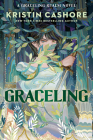
Graceling, by Kristin Cashore creates a really interesting medieval-style world where some people are born with "graces": extraordinary talents. Katsa, the heroine, believes her "grace" is killing people: she's excellent at combat and has been forced into the role of enforcer for an evil king. Turns out her talent is more complex than that. Takes a sympathetic guy (who's also a great fighter) to help her figure out what's going on. Has a satisfyingly unpredictable ending. The sequel/companion book, called Fire, is pretty dismal: Cashore creates a different main character who is so beautiful that everyone goes nuts around her because they're consumed by desire. Kind of the ultimate cheesy fantasy.
Then there's a very interesting trilogy-in-progress called Chaos Walking. First book is
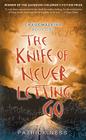
The Knife of Never Letting Go. It's set on a planet which has been colonized by earthlings who came as fundamentalist settlers. Shortly after arrival, a virus infects all the men, making their thoughts audible to others. Women are unaffected. The first book involves an odyssey through many settlements, each of which has dealt with the issue differently, from extreme repression of women to hippie matriarchy. The bad guys are really bad, setting out to take over all the settlements, using extreme coercion and torture in the process. They have also enslaved what remains of the native population. I've read the first two books wondering when the action was going to veer into awful sexual violence, but so far that hasn't happened. A lot of adults try to manipulate the teenage protagonists, and there are some fuzzy lines between resistance and collaboration. It's one of those series that gives a teenager a lot to think about. Also a good read -- I really want the last book to come out, already.
And then, aimed at the sixth grade and up crowd, one more trilogy which is great and impossible to sell. Just mentioning the premise in the presence of a parent is the kiss of death: dystopian future in an America divided into 12 states, each of which must send two teenagers a year to a reality television show which involves the contestants killing each other until there's one winner. Two books are out:
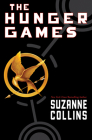
The Hunger Games and
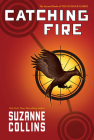
Catching Fire, the third is coming in August. They're psychologically and politically fascinating books. Katniss, the main character and Hunger Games contestant in the first book, is horrified by the games and improvises her way into resistance, initially simply to save herself, and ultimately because her acts on television have helped fuel an underground movement. It sounds grim, but the core of this series is anger mixed with hope.
Time to get back to cheerier stuff --
Love,
Deborah

