In which Annie (high school teacher, mother of two young girls and a younger boy) and her aunt Deborah (children's bookseller, mother of two young women in their 20s) discuss children's books and come up with annotated lists.

Showing posts with label chapter books. Show all posts

Monday, June 28, 2010

On entering Narnia

Dear Aunt Debbie,

The ALA convention sounds fabulous; I've put The Lion and the Mouse on our library hold list, and am jonesing to read Rebecca Stead now as well.  Thank you for keeping me up to date!

By contrast, the great pleasure I've had this past week has been a classic one.  On Thursday afternoon, Isabel was taking a long nap and I was tired of the particular stack of library books Eleanor kept returning to, so I picked up Jeff's childhood copy of The Lion, the Witch, and the Wardrobe just to see if it would take.  It took.  We've been reading a few chapters a day, at Eleanor's request, and finished the book tonight.  I have been in heaven.

In the last three years I've read Eleanor dozens of books I remember from my own childhood.  Why, then, does reading her C.S. Lewis bring me such intense joy?  I think part of it is that I remember my own introduction to Narnia.  Because I was so young when they were read to me, my memories of picture books are of re-readings, but I have a vivid emotional memory of my father first reading to me about Aslan's death: sadness, discomfort and even embarrassment with the ways the White Witch and her cronies abuse him, confusion over his coming back to life.  (It was much, much later that I realized Narnia was a Christian allegory.)  Over the course of several years, my father read me all seven of the books, and we returned to them again and again.

I know Eleanor is too young to understand a lot of what is going on in this book.  But I was pleased to find that Lewis's sentences are smooth and clear and easy to read; except for the children's kingly and queenly language at the end, the language is never obtuse.  Edmund is cringingly real and human, Lucy is plucky and forthright, and Susan and Peter are sort of parental (does any child ever actually relate to them?).  As we read, Eleanor kept stopping me to insert herself into the narrative, not as a character, but as herself: "But that's when I came in, and I saved Mr. Tumnus and told him the Witch was coming, and we had dinner together."  She untied Aslan, too, before the girls and the field mice got to it.  Her attention certainly wandered at points, but she has also asked that we bring this book on our plane trip this weekend, so we can read it again.

Eleanor's interest was piqued partly by the gorgeous Michael Hague illustrations in our copy (which I'm pretty sure I've found here, through Alibris, though the cover image is wrong).  These are the pictures I've used in this post (we finally have a working scanner, hoorah!).  In terms of holding her attention and giving her something to focus on as I read, the pictures were vital.

And so we begin!

Love, Annie

Tuesday, May 4, 2010

More on starter chapter books

Dear Annie,

I'm so fond of the books you list. I agree with Eleanor that the baby-sitter story is the best in Busybody Nora. My favorite part, though, is when both moms realize what happened, and they start to cry. In a funny sort of way. There is however, one important warning to parents about the Riverside Kids books. Nora and Mrs. Mind-Your-Own-Business (to which I am not adding a link to buy) should be avoided. One of the chapters is a major spoiler about the tooth fairy. I discovered this while in the process of reading it aloud. I recommend avoiding that experience.

Margaret posted a lovely comment on your yesterday (5/3) post, which makes me want to do a mini-essay on the transition to chapter books for any parents of 3-4-5 year olds out there. (Let me just mention that Eleanor is a bit ahead of the pack in liking chapter books as much as she does at age 3. Many kids aren't interested in the longer stories until 4 or 5 or 6 years old. Which is fine, and there are hundreds of great picture books to keep your reading time fascinating for all concerned.)

As someone who spends a lot of time talking with parents who read to their kids, I see two missteps which can get in the way of the transition to chapter books -- neither of them major, but you'll be happier if you avoid them.

The first I would call the Stuart Little Problem. We all remember a few wonderful books from childhood, but it's hard to remember at what age we read them. So, a relatively new parent who's been reading grown-up literature for the past 20 years will remember Stuart Little as a great piece of literature, but not remember that s/he was maybe 7 or 8 when last reading it. It's a fantastic book, but rife with really hard language and concepts for a three or four year-old. So I would counsel setting aside the wonderful memories and charging into the (possibly) unknown world of early chapter books that we've been talking about here.

The second obstacle to a smooth transition to longer books is the Magic Tree House Problem, well expressed by Margaret in the aforementioned comment. Somebody on the playground mentions there's this great series of short books about time travel and your kid will love them. Your kid might love them, but it will take you only two or three books (there are currently 43 of them, and counting) to realize they're pretty much all the same story, again and again and again. There's another series, about different kinds of fairies by "Daisy Meadows," which is equally addictive to the young and makes Magic Tree House look highbrow. You, the parent, will not be happy reading these books every night. As Margaret so tactfully put it, they're "a bit of a slog for Mom." These books are great when your child is reading on her or his own, but you can do better for
a read aloud.

Margaret and Annie both commented on the My Father's Dragon trilogy which, along with the abridged Wizard of Oz, (see 4/27 post) were my children's two favorites at this stage. The Jamie and Angus Stories (yesterday's 5/3 post) is great: my favorite chapter has to do with the family turning an outburst of paternal anger into an oft-repeated gentle family anecdote.
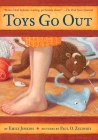
Toys Go Out
, by Emily Jenkins is another book which feels like a collection of stories. It's about the internal lives of three beloved but clueless toys. Both Jamie and Toys have sequels. They're okay, but definitely a step down from the first books. Dick King-Smith, a British farmer best known for Babe (too old for pre-school crowd), has done a number of younger novels.
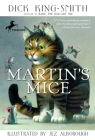
Martin's Mice
is about a farm cat who keeps mice as pets: the mice resent it and the other cats think he's nuts for not eating them. A slightly edgier one is
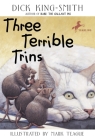
Three Terrible Trins
, which is the funniest book ever about revenge -- in this case it's the farmhouse mice driving the cats off the farm. And let's end this long post with a golden oldie (1938)
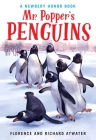
Mr. Popper's Penguins
. Gives you the opportunity to explain both ice boxes and vaudeville (an act with 12 penguins, in this case), and to laugh a lot.

Love,
Deborah

Monday, May 3, 2010

Good starter chapter books

Dear Aunt Debbie,

The Ramona excerpt makes me want to run right out and get a bunch of Beverly Cleary books. I read a few as a kid, but never became a huge fan of hers, not the way I was with Judy Blume or, later, Madeline L'Engle. For some reason, I had a Cleary/Blume opposition in my mind: I felt like I had to choose one of them, rather than reading both. Why I thought that, I have no idea. Looking for a team rivalry, but not interested in following sports?

Because Eleanor is so into stories, and her attention span for books is really quite good, we've tried a number of books over the last year that she was interested in but ultimately too young for: Mary Poppins,The Jungle Book, Little House in the Big Woods. They're all great books, and their time will come. A couple of your suggestions, however, have helped us get started on chapter books.

The Riverside Kids books, by Johanna Hurwitz, are perfect first chapter books. Unfortunately, some of them are out of print, but we've found a number in our library system, and you can find most of them pretty cheaply online. Here's a place where I'd try Alibris if IndieBound didn't get you what you were looking for.

The books focus on kids in two different families living in an apartment building in New York. Each book contains six linked stories which can be read together or stand alone (helpful at bedtime when you don't want to read all night). Nora and her little brother Teddy are the protagonists of the first two books: Busybody Nora and Superduper Teddy. Their neighbor Russell and his little sister Elisa star in some of the later ones: Rip-Roaring Russell, Russell and Elisa, and others. There's a complete list of them on Hurwitz's website.
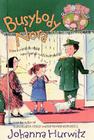

Busybody Nora


We sat down with Busybody Nora, and Eleanor was rapt -- she wanted us to read the whole thing that day, and then asked for specific stories over and over in the days and weeks that followed. Her favorite is "Nora the Baby-Sitter," in which a miscommunication between two moms leaves five-year-old Nora in charge of her three-year-old brother and two-year-old neighbor for most of a day. There's some sweet misbehavior, but everything turns out fine, which sums up the tone of most of the stories. Hurwitz knows exactly how much plot a little kid can handle in one story. The prose isn't always gorgeous, but the stories tap into small desires and worries that little kids have. Eleanor refers to incidents in these books regularly.

I have a habit of tucking a slim book into the back of the diaper bag when we're going on a long subway ride. It has to be the right kind of book: enough stories to keep us occupied for a while, high-interest, not too big or bulky, paperback. Our current diaper bag book is The Jamie and Angus Stories, by Anne Fine, another of your excellent presents.
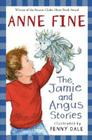

The Jamie and Angus Stories


I love Fine's tone in these stories. Jamie reads like a real kid, thoughtful and curious, and his relationship with the stuffed Highland bull Angus is creative and sweet. I love the adults in the stories too, the way you can hear Jamie's parents and Uncle Edward and Granny letting a little dry wit into their conversations with him. It's not at all treacly, but feels both warm and realistic. Eleanor's favorite story, by far, is "Strawberry Creams," the one in which Jamie, hospitalized for an unexplained stomach ailment, steals his hospital roommate's last 3 chocolates and then feels intensely guilty about it. This story prompted Eleanor's first real discussion of guilt, which is nice, because toddlers are essentially immoral. Are the sequels as good?

Love, Annie