In which Annie (high school teacher, mother of two young girls and a younger boy) and her aunt Deborah (children's bookseller, mother of two young women in their 20s) discuss children's books and come up with annotated lists.

Showing posts with label Ziefert. Show all posts

Sunday, March 11, 2012

Learning to read 4

Dear Annie,

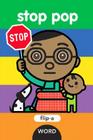
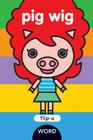
I love the Flip-a-Word books!  Their publisher is phasing them out this year, which makes me quite unhappy.  A week or two ago, I bought up every copy of Snake Cake that I could find from suppliers, but they're going fast.  Harriet Ziefert, who wrote the books,  is a prolific and wonderful writer on many levels -- we've written about her non-early-reader books here and here.

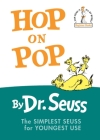
The classic of this form of early reader has to be Dr. Seuss's 
Hop on Pop
.  It's funny, it's frenetic, and it gets the job done phonetically:
ALL TALL
We are all tall.
[pictures of long skinny beings]

ALL SMALL
We are all small.
[pictures of little skinny beings]

Then there's one of the show-stoppers.  Excuse the imperfect illustration: my scanner's still on the fritz and this was the best I could find online:
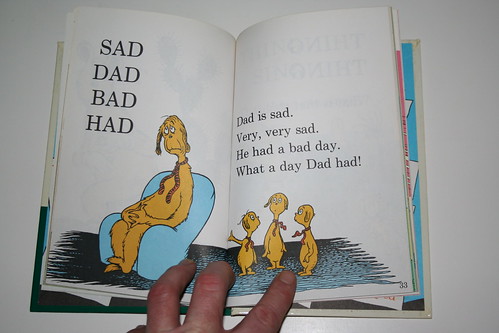
SAD 
DAD
BAD
HAD

Dad is sad.
Very, very sad.
He had a bad day.
What a bad day Dad had!

Lots of rhyming, lots of changing only the first consonant of words.  And -- very important in the learning-to-read trajectory -- lots of HUMOR!  (note who's wearing a tie.)
We've received a number of comments on the
Bob Books
, which are the 800-pound gorilla of the learning-to-read world.  They come in sets: a box with 8 to 12 booklets inside, depending on the reading level.  They're very methodical.  The first set sticks mostly with three-letter words, all capable of being sounded out.  The inside of the cover tells the adult what sounds the book will be presenting.

So for Book 1 of Box 1, the sounds are:
M m - moon
A a - apple
T t - table
S s - sun
And the text goes like this:
Page 1:
   Mat.
Page 2:
   Mat sat.
Page 3:
   Sam.
Page 4:
   Sam sat.
Page 5:
   Mat sat.  Sam sat.
Page 6:
   Mat sat on Sam.
Some kids will pick up booklet #1 and get it immediately and then just keep charging through the clear presentation of different sounds -- and before they know it they're readers.  In my experience, though, this isn't at all universal.  Equally as possible is a Deep Boredom reaction.   A child will get as far as the second "Sam sat" and walk away from the book.  Some of the stories are nothing but non sequiturs, and the sense of humor is thin. For some kids, box #1 is a jumpstart, and they're flying on to anything else they can get their hands on.  For others, they'll go through all five boxes before they're ready to explore more random reading choices.  As with everything else, you just have to see what your child reacts to.

I've always had this suspicion that my sister (your mother) is the person who really invented the Bob Books, and that someone more commercially-oriented created the ones that ended up with a copyright and publisher.  You mentioned that Eleanor has been practicing reading with some of the books Judy wrote as a reading teacher.  They're short, phonetically-oriented booklets, but full of a great sense of humor.  My memory of them is that in the days before the internet, she would xerox them and give them out to other teachers who wanted to use them (Judy -- ??).  Judy has both a great sense of humor and a lovely, funny artistic talent.  I can't reproduce the pictures here, but I will give the full text of The Cat and the Cab, by Judy Thoms.  Each line is a new page:

The cat has a cab. [picture: cat driving a cab, complete with little tree-shaped deodorizer]
The cab gets gas.
A man has a bag.
Cab! Cab! [man is flagging cab driven by cat]
The cab gets the man.
The cat gets the bag. [cat putting suitcase in trunk of cab]
Good-bye, cat.  Good-bye, man.  Good-bye, bag.  Good-bye, cab!

Good-bye readers, one and all.

Love,

Deborah

Saturday, March 10, 2012

Learning to read: word families

Dear Aunt Debbie,

I'm finding Eleanor's first forays into reading fascinating, and also the first time in reading to my children that I've felt like I don't fully know what I'm doing.  I have no memory of learning to read, and aside from knowing that it involves memorizing some sight words and learning to sound things out phonetically, am not sure how to best teach and encourage Eleanor.

I've asked my mom (a reading specialist, and the person whose teaching is getting Eleanor to read at the moment) and a friend who teaches kindergarten and first grade (and therefore, reading) to guest blog in the next couple of weeks, so we can get some expert voices in here.

In the meantime, I hit the library shelves yesterday on my way home.  As you mentioned in your last post, the reading levels governing each series seem wildly different.  I picked up a few books which seemed feasible in the near future, and two which I knew immediately upon looking at them would work with Eleanor right now.

These are from the Flip-a-Word series, written by Harriet Ziefert and illustrated by Yukiko Kido.  The idea behind each book is to introduce kids to "word families": words which end with two or more of the same letters.  The words are short, and within each family, they rhyme.  Once you get the end sound -- "op," "un," "an," "ig," etc. -- it's easy to change the first letter and be able to read a number of related words: "stop," "pop," "top," "cop" (Flip-a-Word:Stop Pop).

The illustrations are blocky and bold, and in each word family section, there's a page in the middle with a hole in it, so that the face on the bun is the same as the face on the sun, and the face on the boy in "run" is the same as the girl having "fun."  Each word is presented solo, then as part of a short phrase ("cop on top of pop") with an accompanying drawing.  The pigs with wigs in Flip-a-Word: Pig Wig are particularly funny.  At the end, there's a page with all the words in each family laid out together, and in each section one slightly more complex word joins them ("twig," "plan").  Finally, there's a page containing all the words used throughout the book, mixed up and in different colors and fonts.

Immediate buy-in from Eleanor.  The books are clear and simple enough for her to read aloud immediately, so there's a sense of mastery, and they're funny, so there's joy in the decoding.

I look forward to more ideas from you, too!

Love, Annie

Sunday, December 12, 2010

On shopping

Dear Annie,

No -- a very satisfying word.  Very useful for younger siblings, who have a lot of other people's agendas to resist.  It was Mona's first word.  I'm glad your younger daughter is enjoying it too.

Another busy day at the store today.  Somehow, in the middle of many adults looking for items on their lists, or intently trying to figure out if a box of markers and crayons is a better gift for their five year-old than a huge jar of collage materials, little beacons of happiness emerge.  Despite the crowds, two four year-olds managed to arrange about fifty small plastic figurines -- fairies, soldiers, polar bears, dinosaurs -- into two very neat rows meandering past several shelves.  It's good to have a very concrete reminder of play in the middle of shopping nuttiness.

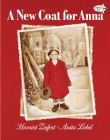
A lovely book by Harriet Ziefert  also gives a little perspective on the shopping season. 
A New Coat for Anna
, illustrated by Anita Lobel, tells the story of a girl and her mother in post-World War II England. 
Winter had come and Anna needed a new coat.  The fuzzy blue coat that she had worn for so many winters was no longer fuzzy and it was very small.
My scanner is not functioning these days, or I would add the lovely drawings of Anna in her short blue coat.  Her mother has very little money, but she has beloved old objects: grandfather's gold watch, a lamp, a necklace and a teapot.  And she has an idea.  Anna and her mother offer the watch to a farmer, in exchange for enough wool from his sheep to make a coat.  The farmer agrees, but says they'll have to wait for shearing time in the spring.
Anna waited for spring to come.  Almost every Sunday she and her mother visited the sheep.  She would always ask them, "Is your wool growing?"  The sheep would answer, "Baaa!"  Then she would feed them nice fresh hay and give them hugs.
At Christmastime Anna brought them paper necklaces and apples and sang carols.
There's a page of pictures of Anna surrounded by sheep who are wearing paper chains around their necks.  The sheep are eventually shorn, the farmer teaches Anna how to card the wool, and Anna's mother barters the lamp to a spinner to spin the wool.  Anna and her mother pick lingonberries in the summer to dye the wool a lovely bright red, then give a weaver the necklace to convert the wool into a bolt of cloth.  The tailor gets the teapot and Anna gets a lovely big red wool coat.  At the end, the four people who helped it to happen come to a modest Christmas party at Anna's house.

Acquisition in this book is so personal -- I'm quite fond of it.

Happy holidays to you.

Love,

Deborah

Sunday, October 31, 2010

The allure of emergency

Dear Annie,

Bob and I gave blood today.  It took a while, and there was a messy moment when a donor and the man with needle weren't entirely coordinated, but one still feels good having given. 

All that blood, though, made us think of a book whose popularity in our house always mystified us.  It's called Stitches, by Harriet Ziefert, and is, alas, currently out of print.  It's an early reader which we used as a picture book read-aloud.  It tells the story of Jon, a slightly excitable boy, who falls off his bike, cuts his head ("I fell!  I fell!/There's blood!  There's blood!"), and goes to the doctor to get stitches.  Each step is explained, and at the end he's home being visited by his friends.

This book fascinated both the girls when they were around 4 and 5, before either one had her own experience with being sewn up.  I remember reading it over and over.  The kid is so full of hurt and worry and exclamation points, yet the injury is so contained: just a few stitches, done at the doctor's office.  I think it gave them a little vicarious catastrophe, enough to make the heart beat a little faster. It expanded their horizons of the possibility of damage, without their having to go through it.  I know that in the past I've encouraged parents to try to avoid books they don't like, and this one could certainly have fit in that category.  But it was so apparent that this little story was hitting a nerve in their growing psyches -- the fascination definitely outweighed the lack of literary merit.

I hope you had a good birthday, and Happy Halloween.

Love,

Deborah