In which Annie (high school teacher, mother of two young girls and a younger boy) and her aunt Deborah (children's bookseller, mother of two young women in their 20s) discuss children's books and come up with annotated lists.

Showing posts with label Macdonald. Show all posts

Sunday, January 6, 2013

Levity

Dear Annie,

What a spectacular book Little Nemo in Slumberland is.  And those pictures of Jeff and Isabel reading!  We need to incorporate them into our permanent collection here on the blog.  The sheer size of the book makes me think of lying on the floor reading the Sunday funnies.
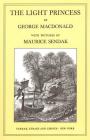
Way back in November, you wrote about George MacDonald's The Princess and the Goblin.  I'm curious to know what happens if you give it another try with Eleanor.  I don't know the book, but have been a fan of MacDonald's
The Light Princess
since my own childhood.  Was it part of your growing up?  It's such a delightful combination of fairy tale and wordplay.  And in 1969 (a year before publication of In the Night Kitchen) Maurice Sendak did a wonderful series of illustrations for it -- including one with a naked baby which apparently triggered none of the controversy that came a year later.

After longing for a child, a king and queen finally have a baby.  They forget to invite the king's sister, Princess Makemnoit, to the christening.  So of course she shows up, muttering a charm at the font:
"Light of spirit, by my charms,
Light of body, every part,
Never weary human arms --
Only crush thy parents' heart!"
They all thought she had lost her wits, and was repeating some foolish nursery rhyme; but a shudder went through the whole of them notwithstanding.  The baby, on the contrary, began to laugh and crow; while the nurse gave a start and a smothered cry, for she thought she was struck with paralysis: she could not feel the baby in her arms.  But she clasped it tight and said nothing.
   The mischief was done.
The princess has no gravity, in both senses of the word.  When the baby is tossed into the air, she floats upward until air resistance slows her.  One summer day a breeze blows her out a window:
She's found in a rose bush. laughing cheerily.  She laughs at everything: floating above the servants' reach she's "like a baby-laughter-cloud in the air, exploding continuously."  She takes nothing seriously, making light of everything -- which makes her parents predictably sad.  To propel herself across the ground, she must hold onto rocks in each hand.
I may here remark that it was very amusing to see her run, if her mode of progression could properly be called running.  For first she would make a bound; then, having alighted, she would run a few steps, and make another bound.  Sometimes she would fancy she had reached the ground before she actually had, and her feet would go backwards and forwards, running upon nothing at all, like those of a chicken on its back.  Then she would laugh like the very spirit of fun; only in her laugh there was something missing.  What it was, I find myself unable to describe.  I think it was a certain tone, depending upon the possibility of sorrow -- morbidezza, perhaps.  She never smiled.
Eventually it is discovered that swimming gives her some gravity: she loves it and becomes a tad more serious when water is keeping her from floating away.  "Perhaps that was because a great pleasure spoils laughing." 

During one nighttime solitary swim, a prince wanders into the story and falls into the lake, where he falls in love with the lovely princess.  The evil witch gets wind of this and makes bad things happen to the swimming lake, and then the prince offers himself as a sacrifice to restore it.  His near-death -- and a good long cry on her part -- restore her gravity, and introduce her to love.  The wedding, which leads to happily ever after, has to be postponed, however, until she learns to walk, "for she could walk no more than a baby."

A satisfying and funny tale.

Love,

Deborah

Sunday, November 25, 2012

Goblins! And, you know, princesses too.

Dear Aunt Debbie,

It was so lovely to see you, Bob, and Lizzie this week!  Much joy of Thanksgiving pies and reading of books.

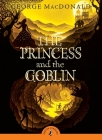
Your mention in your last post of a YA book involving goblins made me think of one of my childhood favorites, which I remember my father reading to me: George Macdonald's 1872 fantasy The Princess and the Goblin.  We have a bit of a goblin mythology going in our house, sparked by Jeff's habit of telling the girls that the metal doors in the sidewalk (going down into store basements) or in the walls of the Brooklyn-Battery Tunnel are "goblin doors."  Many a morning walk to school has involved Jeff's elaborate goblin stories, with Eleanor's eager participation.

Because of this, and because of my fond memories of the book, I picked up The Princess and the Goblin with Eleanor maybe a year ago, only to run into the Stuart Little Problem.  Perhaps it's time to try again.

It's a bit of a dark tale, centering on eight-year-old Princess Irene, who lives a cloistered life in her father's castle, unaware of the goblins who live in the hills just below.  One evening, she and her nursemaid Lootie stay out too late, and are almost captured by goblins, but are saved by a miner boy named Curdie, who sings to drive them away (in this world, goblins hate singing).  Irene becomes aware after this incident of the danger and darkness just outside her walls and beneath her feet.  Through Curdie's underground spying, she later learns of a plot the goblins have to make war on the humans, who exiled them belowground years before.  My memory is that there's some sympathy for the goblins' predicament, but that they're largely described as unpleasant and ill-formed -- a tribe of Calibans.

On the upper floors of the castle, Irene discovers her great-great grandmother, who lives up in a high attic raising white pigeons, and offers Irene advice.  I can't remember if the great-great grandmother is supposed to be some kind of spirit or is definitely corporeal -- it's that kind of book.  Over the course of the story, Irene develops a friendship with Curdie, who gets a chance to rescue her from the goblins later, and there's a sequel about the two of them: The Princess and Curdie.

In the last few weeks, Isabel has caught the Princess bug, and there's been a lot of Cinderella role-playing going on (though she likes to be one of the stepsisters more often than not, because she can pretend to be really mean).  I have a feeling we'll be reading princess books for quite some time yet.

Love, Annie