In which Annie (high school teacher, mother of two young girls and a younger boy) and her aunt Deborah (children's bookseller, mother of two young women in their 20s) discuss children's books and come up with annotated lists.

Showing posts with label Jenkins. Show all posts

Monday, May 27, 2013

Playing in the Park

Dear Annie,

Eleanor's progress through the early readers is a delight to watch.  She's picking some of the classic authors of the genre: Cynthia Rylant and  Syd Hoff in your previous post, and now James Howe.  Howe is probably best-known for Bunnicula, a chapter book series about a vampire bunny who sucks the juice out of vegetables.  And he's done a more recent series about kids in middle school who are ostracized for different reasons.  He's impressive in a number of different genres.

Not unlike our pal Emily Jenkins, author of the wonderful early chapter book Toys Go Out, a handful of picture books including the mathematically-inclined Five Creatures, and, writing as E. Lockhart, YA novels including the excellent The Disreputable History of Frankie Landau-Banks.  She's got a lovely new picture book:
Water in the Park
, illustrated by Stephanie Graegin.  Sooner or later, a non-New York-based bookseller can sometimes feel, all roads lead to Brooklyn.  This book was based on a summer's observation of Prospect Park, but the experience is definitely universal.  Going from dawn to dark, Jenkins lists various activities in the park -- most of them having to do with water.

Turtles leave their rocks when early morning dog-walkers arrive -- panting in the heat, the dogs say, "Heh. Heh. Heh."
Mr. Fluffynut is scared to go deeper than his doggy ankles.
He holds a tennis ball tight in his mouth and will not give it up.
"Drop it!" says his human.
But Mr. Fluffynut will not drop it.
By 7 a.m. babies arrive, sprinklers are turned on (one baby cries, the other laughs),and soon a panoramic illustration of the playground shows dozens of children in motion.   In late morning, park workers water plants.  Then it's lunchtime:
Coming up on noon, it's time for lunch.  Maybe a nap.
Some children cry.
Claudie K. clings to the leg of a bench.
"Not going home," she says.  She likes it here.

We'll see more of Claudie in the afternoon.

The grown-ups show up to eat lunches on benches.

On very hot days, the ice cream truck comes early.
By two, its tune is already jingling.
Children coming back to the park get soft-serve cones and bright Popsicles.
Grown-ups buy bottles of water.
Sticky fingers and faces are rinsed in the sprinkler.
Kids dump water on each other and run through sprinklers, someone scrapes a knee, a naked baby runs away from clothing.  When the sprinkler is turned off, the baby who cried when it was turned on now laughs, and the water-loving baby cries.  Dog-walkers and other grownups return, and as it turns to dusk a downpour soaks those who linger.

It's a lovely recitation of the details of life, with many many details to pore over.  I love it for its quiet way of taking everything seriously.  Jenkins' theme of uniting it all with water (pond, sprinklers, bottles, rain) didn't quite work for me.  The human rhythms seem to be the theme of the book.  The detail that's missing here is the drumbeat of cell phones: I can't find even one in the entire day.  Idyllic.

Love,

Deborah

Wednesday, September 14, 2011

Math: more than numbers

Dear Annie,

All this talk of school makes me think of two of my favorite books about math.  Math education was a big surprise to me as a parent: the pedagogy had evolved hugely in the 40 years from my school days to those of my children.  The foundations of mathematical thinking are emphasized now, especially in the lower grades: patterns and concepts trump tables, big time.  From kindergarten up, Halloween became math homework as the girls would dump their loot on the floor and sort and classify it and create graphs about what they got.

The idea that one can arrive at an answer in math through many different routes is central.  My favorite book on this subject is
Five Creatures
by Emily Jenkins. She wrote it ten years ago, before her wonderful forays into early chapter books and YA chick lit.  The cover of the book shows the five creatures: a girl, her parents, and two cats.
Five creatures live in our house.  Three humans and two cats.
Three short and two tall.
Three with orange hair [girl, mom, one cat], and two with gray [dad, other cat].
Two with long hair [girl, mom], three with short [dad and cats].
It goes on to classify many things that characterize some but not all of the household.  My favorite spread is "Three who can button buttons [girl looking proud].  Four who can open cupboards [parents trying to shoo cats from cupboards, girl looking forlorn on the floor]."  Math as part of the entertainment of life is what cheers me up about this approach.

Robert and the number devil
And for an older -- say, third grade and up -- child, there's the amazing
The Number Devil: A Mathematical Adventure
, by Hans Magnus Enzensberger (translated from the German).  It's the story of Robert, who on twelve different nights is visited in his dreams by the number devil, whose job is to explain the basic principles of mathematics.

On the first night, Robert and the number devil discuss the number one, with the help of some chewing gum and many mice.  Zero and negative numbers come along on the second night.  The third night is prime numbers: the chapter during which both of my daughters separately jumped out of bed and found paper and pencil to figure out prime numbers as explained by the devil.

The sixth night is Fibonacci numbers (explained with rabbits, of course), which any self-respecting  third grader knows about these days.  Then the book launches into things which are comprehensible during the explanation, but for me they're like relativity: I can retain them for only an hour or two without getting muddled.  But it's written so engagingly, the higher concepts really are comprehensible.  On the seventh night, the number devil builds Pascal's Triangle
Honest, this is stuff a third-to-sixth grader can understand.  Take, for instance, the R entries in the index:
Rabbit clock
Rabbits
Raising to a higher power
Recursion
Roman numerals
Russell, Bertrand (1872-1970)
Rutabagas (Square roots)
 And the number devil is such an annoyingly likable guy:
"You probably think I'm the only one," said the number devil the next time he turned up, perched on a folding chair in the middle of a vast potato field.
"The only what?" asked Robert.
"The only number devil.  But I'm not.  I'm one of many.  Number Heaven, where I come from, is teeming with us.  I'm not even one of the bosses.  The bosses do nothing but sit and think.  Now and then one of them will laugh and say something like 'Rn equals hn factorial times f of n open bracket a plus theta close bracket,' and the others nod and laugh along.  There are times when I don't understand a thing."
"You poor devil," Robert said.  "Here I though you were so sure of yourself."
"Why do you think they send me out at night?  Because the bigwigs have things to do other than visiting apprentices like you."
"So I'm lucky to have even you.  Is that what you're saying?"
 It's a delightful read.

Love,

Deborah

Sunday, March 6, 2011

Chick Lit, part 1

Dear Annie,

I didn't realize you were such a Madeleine L'Engle fan.  A couple of people have told me they were disappointed in The Austin Chronicles, her realistic fiction series.  But I've never tried them myself.  I love A Wrinkle in Time, although, as with the Narnia books, I wish it didn't have that injection of religion in it.

Denise left a bunch of questions on your L'Engle post that I'd love to answer.  She wants
books that young adolescent girls can read who are interested in romance and relationships - who need to stop reading "chic" lit - Gossip Girl-like books - and who are smart enough to read more challenging ones. I can only think of Jane Austen but would like to recommend more modern literature.
For the Jane Austen sensibility, there's
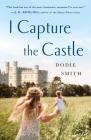
I Capture the Castle
by Dodie Smith, author oddly enough of 101 Dalmatians (another interesting kids' book, for a different audience). She wrote it in 1948, and I usually describe it as Pride and Prejudice set in Depression-era England. The writing is wonderful, as illustrated by the book's first paragraph:
I write this sitting in the kitchen sink. That is, my feet are in it; the rest of me is on the draining-board, which I have padded with our dog's blanket and the tea-cosy. I can't say that I am really comfortable, and there is a depressing smell of carbolic soap, but this is the only part of the kitchen where there is any daylight left. And I have found that sitting in a place where you have never sat before can be inspiring -- I wrote my very best poem while sitting on the hen-house. Though even that isn't a very good poem. I have decided my poetry is so bad that I mustn't write any more of it.
The narrator's father is an impoverished writer who wrote one brilliant novel 20 years earlier and has done nothing since. The family, including 17 and 20 year-old daughters, are living a hand-to-mouth existence in a decaying castle in the country. Then two wealthy young American brothers buy the estate next door, and the comedy of manners begins. It's quite wonderful, but probably not the first step when one is trying to entice Gossip Girls fans.

My favorite recent entry in this category is
The Disreputable History of Frankie Landau-Banks
by E. Lockhart. I saw her speak once and she introduced herself saying, "I write feminist Chick Lit," which is quite an accurate description.  E. Lockhart, I discovered only last week, is a pen name.  Under her real name, Emily Jenkins, she's written several wonderful books for younger kids, including Toys Go Out, a great early chapter book blogged about here.

Disreputable History was a runner-up for the Printz Award (YA literature) and the National Book Award the year it came out.  It's about a girl who becomes noticeably more attractive between her freshman and sophomore years at an upper-crust boarding school.  Boys who ignored her the year before now pay lots of attention to her, but after a while she realizes they don't actually listen to her.  She also figures out that a centuries-old secret society is still in existence at this school, but that it remains all-male, even though the school is now coed. So she sets out to get revenge -- through staging some wonderfully outrageous pranks.  It's wildly funny.

Next time I'll talk more about other authors in this category.  There are many ways to avoid the really trashy stuff, some of it with slightly classier trash, but some of it better than that.

Stay tuned..

Love,

Deborah