In which Annie (high school teacher, mother of two young girls and a younger boy) and her aunt Deborah (children's bookseller, mother of two young women in their 20s) discuss children's books and come up with annotated lists.

Showing posts with label Graham. Show all posts

Thursday, June 13, 2013

Funky parents, and a chicken

Dear Aunt Debbie,

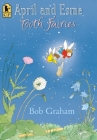
After writing briefly about Bob Graham last week, I found myself thinking more about the wealth of detail in his illustrations.  Rereading April and Esme, ToothFairies, I noticed that Fay, the fairy mom, has a small blue tattoo on her right shoulder. (Take an extra moment here to appreciate the household items that have been repurposed as bathroom furniture.)


John, the fairy dad, sports a ponytail. In an early scene, he's shown hanging up the family laundry to dry in front of the fireplace.


They're a little funky.

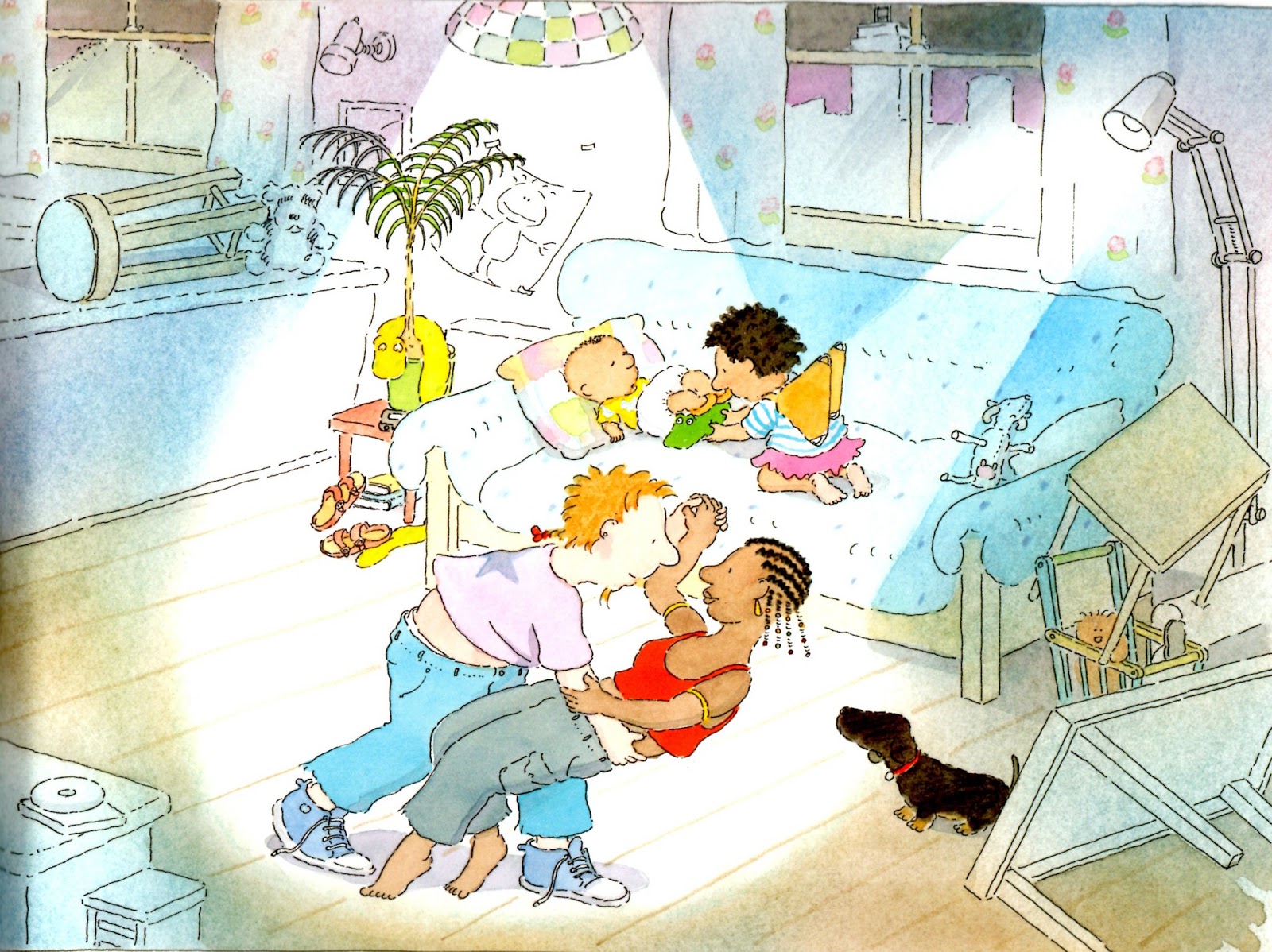
This shouldn't be a surprise: the parents Bob Graham draws often are.  Here are the mom and dad from Oscar's Half Birthday, moving furniture aside to dance together in the living room after they get home from celebrating:


And here are the parents from Queenie, One of the Family: mom with short pink hair, dad with an earring knitting booties for their coming baby:

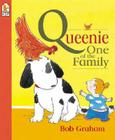
Queenie is another favorite of ours, gifted by you.  It's the story of a family living across a highway from farmland, who rescue a hen from a lake and take her home for a bit before bringing her back to the farm where she belongs.  (Again, there's that city/country combination.)

They name the hen Queenie, and she bonds with the family: mom, dad, daughter Caitlin, and Bruno the dog, whose basket she usurps before being taken back to the farm.  But Queenie returns: every morning, she walks from the farmyard over the road, across the highway bridge, and in through the dog door to lay an egg in Bruno's basket.

The drawings show what happens to the eggs, which are used for breakfast and then to make a cake for Caitlin's first birthday. And it is the drawings, rather than the text, which set us up for the birth of Caitlin's little brother.  This isn't a heavy-handed New Baby book: the preparations for the baby take place entirely in pictures, and the focus isn't on Caitlin's reaction to him (though there's a lovely illustration at the end of her trying to balance a stuffed animal on his head).  But the baby's arrival is exciting enough that Caitlin forgets to collect Queenie's eggs, and Bruno the dog accidentally hatches them. Then the chicks need to be returned to their mother, across the highway bridge and over the path -- Graham's refrain in this book is "That might have been the end of the story -- but it wasn't!"  There is so much story here, and so much warmth to be found in rereading.

Love, Annie

Friday, June 7, 2013

Tooth fairies with cell phones

Dear Aunt Debbie,

Really interesting speech from Veronica Roth about the importance of humility as both a reader and a writer. The way she writes about her fans educating her about the problems with her use of sexual assault as a plot device made me think of Kristin Cashore's acknowledgments section at the end of Bitterblue.  Cashore describes the way she came to see her treatment of one of her main characters as problematic when viewed through the lens of the disability rights movement.  This character goes blind towards the end of Graceling, but is endowed with special powers which allow him to effectively hide his blindness from the rest of the world.  While he is physically disabled, he doesn't have to deal with the real-world effects of that disability.  There's something kind of wonderful about this quick and detailed back-and-forth between author and readers, though I imagine something terrifying about it too.

It was lovely to see you last weekend!  The books you brought have already become household favorites; today, in fact, I was asked to read Bob Graham's April and Esme, Tooth Fairies, no less than three times.  (Regular readers will notice that I've put up a brand-new picture of you reading to Isabel; that's the book she's gazing at so intently.)

I love Bob Graham's books.  They have a sweetness to them, a kind of mellow, oddball feel.  His characters are gentle -- not a lot of conflict in the worlds he creates, though there is some drama.  In April and Esme, the title characters are two young tooth fairies, setting out to bring back their first tooth, and leave their first coin.  Their parents, also tooth fairies, worry at first:

"You and Esme?  A tooth in Parkville?" said their mom, Fay.  "Darlings, you're far too young."

"You went by yourself when you were six, Mommy," said Esme.  She balanced a bubble on the end of her finger till it popped.  "Same age as me--and April's even older."

"Well, that was long ago," said Mom.  "Before the highway came.  Foxes still chased hares on the hill, and things were different back then."

"Well, some things haven't changed, Mommy."  Esme took a sip of her dandelion soup.
"Children still lose their first teeth," April said, "and ducklings still have to take their first swim."

So April and Esme set off, with instructions from their father to remember that the boy, Daniel, thinks they are magical spirits, and must not see them, and from their mother to text her if they need to (they do).  Yes, text: one of the things I like so much about Graham's work is the way he combines the old and the new, nature and the intrusion of the modern world.  Fairies carry cell phones, and their home in a field next to a stump is right up next to a busy highway.  In Oscar's Half Birthday, the family lives in an apartment building and has to go past train tracks with graffiti on them in order to get to "the half-country" for their picnic.  There's no fight between these different elements; they simply exist, side by side.

Graham illustrates his own books, and his detailed pictures often hint at elements of the story that he doesn't explain directly in the text.  In April and Esme, the fairies find Daniel's tooth in a glass of water by his nightstand, and April has to dive to retrieve it.  A couple of pages later, we see Grandma asleep with her dentures in a glass of water on her nightstand.  April tells Esme not to try to take the dentures, but no one explicitly says what the drawings show you: that Daniel has put his tooth in water to be like his grandmother. In a drawing of the fairies' living room, you might notice that their rocking horse is a chess piece: a knight turned on its side, with wheels added.  In a bathroom scene, the mom dries her hair in one panel, then holds up the hair dryer to waft Esme higher in the air on her wings as they talk.  There's a lot to find and enjoy, amid the pleasing round-faced characters and ponytailed dads.

Thanks for the gift!

Love, Annie

Monday, June 13, 2011

Guest blog: The poetic language of Lorenz Graham

Dear Aunt Debbie,

Our guest blogger tonight is none other than my mom, your sister, Judy.  This is a true family affair!  Here she is, on a book I remember with great fondness from my childhood.

Dear Debbie,

One of my very favorite children’s books is Every Man Heart Lay Down by Lorenz Graham, with lovely illustrations by Colleen Browning.  It’s a retelling of the birth of Jesus in, as Graham says, “the idiom of the West African native.”

Lorenz Graham was born in New Orleans, the son of a Methodist minister.  As a young man, he worked as a teacher in a mission school in Liberia for five years and was amazed at the power and beauty of the English dialects he found there, and at the way the Bible stories had been made new again by being retold and reimagined.   He absorbed the music and rhythm of the speech that enveloped him, and these story poems are the result.

Our dear friend Sally, who had a knack for spotting marvelous language, gave us “Every Man Heart Lay Down” when Annie was little.  It is the kind of book that cries out to be read aloud, and challenges you to do it without choking up: 

Long time past
Before you papa live
Before him papa live
Before him pa’s papa live—

Long time past
Before them big tree live
Before them big tree’s papa live —
That time God live.

And God look on the world
What He done make
And Him heart no lay down.

The plot is the prequel to the story of the birth of Jesus you may be familiar with.  In this book (spoiler alert), God is about to destroy the world, he is so angry about the way things are going, when a small boy begs him,

“Don’t break the world
What You done make.
Don’t lose the people
What You done care for.
I beg you
Make it I go
I talk to people
I walk with people
Bye-m-bye they savvy the way.”

And the pican go down softly softly
And hold God’s foot.
So God look on Him small boy
And Him heart be soft again

Once you start quoting this book, it is practically impossible to stop, the writing is so lovely. 

Graham is also the author of other Bible stories told in the same vein. 
How God Fix Jonah
is the name of his collection, originally published in 1946, which came out in a new edition in 2000, illustrated by Ashley Bryan.  It includes “Every Man Heart Lay Down,” as well as “David He No Fear,” which also was published alone in an edition with pictures by Ann Grifalconi.

Just one more quote.  I can’t resist.  Here is the passage where David walks up to Goliath:

The giant say
“Ho! Small boy done come to say how-do.”
David say
“I come for fight!”
Giant say
“Do you mommy know you out?”
David say
“Now I kill you!”
Giant say
“Go from my face less I eat you!”

Graham is also the author of “Tales of Momolu,” stories about the life of an African boy, as well as the Town book series of contemporary African American life.   I am not familiar with these books yet.   Do you know them, Deb?

Love,
Judy

And love from me too,
Annie