In which Annie (high school teacher, mother of two young girls and a younger boy) and her aunt Deborah (children's bookseller, mother of two young women in their 20s) discuss children's books and come up with annotated lists.

Sunday, November 13, 2011

You -- yes, you! -- are reading this book

Dear Aunt Debbie,

You have your finger on the pulse of the children's book world with your thoughts about superhero books!  In this weekend's NYT Book Review, Roger Sutton touches on the same subject (though I must say, he's a little more dour).  I'm kind of sorry to see Bumblebee Boy go off by himself -- afraid, I guess, that his solo books will be aimed at boys and perhaps take boy readership away from the Ladybug Girl books, the way Dora was more okay for boys to like until Diego came along.

Writing last week about books that engage the reader with the idea that a book is being constructed as they read got me thinking about a few picture books written in the second person which are big hits at our house.

Right Where You Are Now, by Lisa Montierth, came to us as a family gift: cousin Molly sent it recently to Eleanor and Isabel (she's friends with the illustrator, Ashley Burke).  I wasn't at all sure what to expect from the cover, which has a sort of Hansel and Gretel vibe, but the book is based on an interesting idea, and the illustrations are terrific.  Each double-page spread includes a scene of today's world on the left, and a scene from prehistoric times on the right:

It gets you talking about prehistory, with all its lava and lush rainforest growth, and it certainly increases your prehistoric animal vocabulary: plesiosaur, merychippus, nimravid.  If you're concerned about telling these guys apart or pronouncing their names properly, never fear: the last pages include a visual dictionary, so you can be sure you're not mixing up megacerops and uintatherium (as I did on the first reading).  It's kind of awesome to hear your 2-year-old yelling out "Nimravid!" when you turn the page to see the face of a saber-tooth cat-like creature (actually not a feline, but related as much to hyenas as to cats).  It's my favorite kind of nonfiction book: well-written, imparting its information in context, leading to lots of questions.

There Are Cats in This Book and its sequel, There Are No Cats in This Book, are purely playful.  Viviane Schwarz is the author-illustrator here, and the two books focus on a trio of cats (Tiny, Moonpie, and Andre), who address the reader directly.  In the first book, the cats want you to play with them.  They tell you when to turn the pages, and ask you to throw them balls of yarn and open the boxes they're hiding in.  When they get wet on a page full of fish, they ask you to blow on them, and emerge all fluffy.  The pages abound with flaps, and the cats are very good-natured and eager for what's going to come next.

In There Are No Cats in This Book, the cats are antsy.  They want to get out of the book, and will try pretty much anything: pushing the side of the page, jumping out (the book becomes a pop-up for a moment), and finally, asking you to wish them out.  Then they send you a postcard, before eventually returning to the book.  The cats' manic energy is totally engaging.  Even though Eleanor and Isabel both know that they're not really changing the content of the book by doing what the cats ask, they get into playing with it.  Another way of exercising your superpowers, I suppose....

Love, Annie

Thursday, November 10, 2011

Superhero!

Dear Annie,

Denise, your pal, occasional guest blogger, and mother of a soon-to-be 2 year-old boy, raised this question after your most recent post:
As I have been thinking of books to get Emerson, I have been noticing that he gravitates toward Superman and popular cartoon books that involve action, fighting, and lots of loud glossy pages, books I do not enjoy reading. He likes Star Wars, the Incredibles, all those Nickelodean characters..

I would love recommendations for my lil' boy who loves to pretend fight, play with balls, and turn anything into a bat. 
I'm sticking to the superhero part of this question today, starting with
SuperHero ABC
, by Bob McLeod, whose day job is being a comic book artist.  It's your basic ABC book, but each letter is a superhero, starting with "Astro-Man is Always Alert for An Alien Attack.  He Avoids Asteroids!  He has Asthma!"

Here are a few more:
Fun sense of humor, occasional gross moment ("The Volcano Vomits on Villains.  He's Valiant!  He's Vile!  It's Very gross!")  No plot, but as long as Emerson isn't totally identifying with brand-name superheroes, there's lots to look at.

Parents come to the store frequently looking for books about superheroes or Star Wars characters that they can read to their very young children.  The demand is usually there because the kids are aware of the characters, but don't really know who they are.  The parents don't want serious violence and they don't want to show their kids the contemporary movies on these characters.   Three very basic biographies of Batman, Superman and Wonder Woman by Ralph Cosentino hit the spot on this request.


They give enough background information about the characters that other books -- and playground scenarios -- will make more sense.  Definitely worth a parental read-through before introducing them, though.  The basic stories have a certain amount of destruction and demise of parents.  They're in comic book format in small-ish hardcover books and sell incredibly well at the store. 

Our friend Bumblebee Boy, last seen negotiating pretend play roles with Ladybug Girl, now has spun off a book of his own:
The Amazing Adventures of Bumblebee Boy
, by David Soman and Jacky Davis.  Ladybug Girl isn't here, but Bumblebee Boy (aka Sam)'s kid brother Owen is constantly trying to enter Sam's adventures.

While Bumblebee Boy clashes with evil pirates, fights a fire dragon, stops a runaway lion, and has various other adventures, the pajama-clad Owen keeps intervening.
"No, Owen!  I am playing Bumblebee Boy," says Sam.  You can't be in this game."
"Why?" asks Owen.
This is a bit of a problem.  Sam knows that he is not supposed to be mean to Owen, but he feels like playing his own game right now.
Sam must think fast.
"Because," says Sam, "you are not a superhero like me, see?"
Sam dashes off.
Eventually, Bumblebee Boy decides that fighting aliens on the moon is too much for him to do alone, and he and Owen negotiate a deal in which Owen brings along some bank robber monsters to the moon.  It has echoes of Even Firefighters Hug Their Moms in its pretend play elements, but lots of good swashbuckling too.

And then there's
The Astonishing Secret of Awesome Man
by Michael Chabon (yes, that Michael Chabon).
Hi!  I'm a superhero [says the guy flying through an urban landscape in a Superman-style cape-and-tights outfit].  My name is Awesome Man.
I have a cape as red as a rocket,
a mask as black as midnight,
and a stylin' letter A on my chest.
I'm just basically awesome.
 He does awesome, totally super-hero-ish stuff --
-- sometimes with his Awesome Dog Moskowitz.  He stops trains, vanquishes Professor Von Evil in his Antimatter Slimebot, and gives the Flaming Eyeball his comeuppance.  Sometimes he gets a little too wired and starts hitting buildings and throwing trucks around.  "I might hurt somebody, or destroy a city or something."  So he calms down in the Fortress of Awesome and has something to eat.  By the end of the book he's revealed his secret identity -- a slightly airbrushed-looking kid -- and like the firefighter of yore, hugs his mom.

So Denise, these are all definitely action-packed books, but they have more humor, style, and even good writing than the stuff that gets generated by the licensed-product machinery.  I hope there's something here that makes both you and Emerson happy.

Love,

Deborah

Tuesday, November 8, 2011

Breaking the fourth wall

Dear Aunt Debbie,

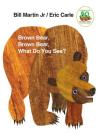
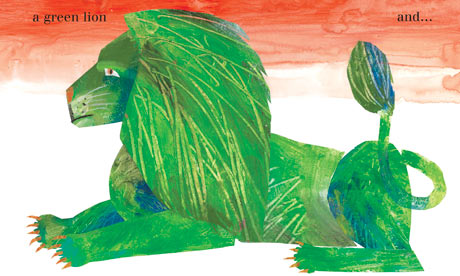
Before I move too far away from the subject of books on color, I want to include a shout-out for another Eric Carle book that Isabel adores: Brown Bear, Brown Bear, What Do You See?  Carle is the illustrator here (Bill Martin, Jr. wrote the text), so the pictures are his wonderful familiar streaky collages.  It's kind of the proto-version of The Artist Who Painted a Blue Horse: lots of illustrations of brightly-colored animals, though here most are the colors nature made them.  The question and answer format is rhythmic, and encourages kids to respond when you read it aloud: "Brown bear, brown bear, what do you see?  I see a yellow duck looking at me." We read it a lot.

Your discussion of Linda Sue Park and the way she plays with narrative voice in Project Mulberry got me thinking about other authors who address their audiences directly or in other ways consciously engage kids with the fact that they are constructing a book.  Sometimes this involves a conversation between author and character, as you write about with Park; often, it happens through a second-person address directly to the reader.

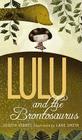
Judith Viorst (of Alexander and the Terrible, Horrible, No Good, Very Bad Day fame) has a recent entry in this category: Lulu and the Brontosaurus, which you mentioned briefly last year here.  It's a short chapter book, packed with attitude from the first page:

OKAY!  All right!  You don't have to tell me!  I know!

I know that people and dinosaurs have never lived on earth at the same time.  And I know that dinosaurs aren't living now.  I even also know that paleontologists (folks who study dinosaurs) decided that a dinosaur that was once called a brontosaurus (a very nice name) shouldn't be called brontosaurus anymore, and changed it to apatosaurus (a kind of ugly name).  But since I'm the person writing this story, I get to choose what I write, and I'm writing about a girl and a BRONTOSAURUS.  So if you don't want to read this book, you can close it up right now -- you won't hurt my feelings.  And if you still want to read it, here goes:

Most of the rest of the book is a straight narrative (though it does contain a number of parenthetical asides), about an extremely bratty little girl named Lulu who decides she wants a brontosaurus for a pet.  She's spoiled, and won't take no for an answer, so when her parents refuse to get her one, she takes off into the forest by herself.  Lulu runs into several wild animals, who she's rude to and then defeats easily: squeezing a snake, bonking a tiger on the head with her suitcase.  She finds her brontosaurus, but -- here comes the twist -- it turns out that he wants to make her into the pet, not the other way around.  She learns a little humility, and ultimately apologizes to the other animals, and life is better.  As so often happens with these Children Behaving Badly stories, she's more interesting when unrepentant.

The catchphrase that has come to us from Lulu is her catchy, repeated rhyme:

I'm gonna, I'm gonna, 
I'm gonna gonna get

A bronto-bronto-bronto 
Brontosaurus for a pet.

I'm gonna, I'm gonna, 
I'm gonna gonna get

A bronto-bronto-bronto 
Brontosaurus for a pet.

Fair warning: reading about Lulu leads to lots of chanting of the above.

At the end of the book, Viorst plays heavily with narrative voice again ("Wait!  I'm really not all that sure about this ending.  It may be a little too mushy, a little too sad").  Eleanor enjoys this telling and re-telling, and I think it's a interesting model to expose kids to when they're making up their own stories all the time.

There are some picture books I have in mind as well, but I'll save them for another night.

Love, Annie

Sunday, November 6, 2011

Linda Sue Park

Dear Annie,

It makes me happy that The Artist who Painted a Blue Horse is a hit in your family.  I love all the pictures, but wasn't sure how it would play with kids as a book.  There's a whole category of picture books which I see before they're published and I say, "It'll be great when it's a board book," and then I don't buy them as hardcover/paper page books because I can't see the appeal to older kids.  I waffled on this one, but Carle's pictures pulled me in.  I have a 3-foot tall poster of the blue horse from the cover on a wall at the store -- can be seen from quite a distance.

Maybe because business is getting busier and busier (yes, all the Christmas and Hanukkah books are on display already), I find my focus with the blog bouncing all over the place.  This week I've come back to Linda Sue Park, a wonderfully versatile author.  I've talked about A Long Walk to Water, set in the Sudan.  She's written many books, both picture books and middle-grade novels.  She even has a new Christmas book this year: The Third Gift, which taught me a lot about frankincense.

Park is Korean-American, and many of her books include Korean themes.  A Single Shard, for which she won the 2002 Newbery Award, is about a 12th century Korean potter and his apprentice.  But the one I wanted to talk about today is about a contemporary Korean-American girl:
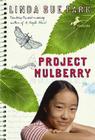
Project Mulberry
.  There are two things that make this book engagingly out-of-the-ordinary.  First, it deals with kids' feelings about race, in age-appropriate ways.  Julia and her friend Patrick want to do a project for the state fair, and her mother (who is Korean) suggests they raise silkworms.  Julia doesn't want to be typecast as the Asian kid in her predominantly white small town, but doesn't know how to resist the silkworm idea.  "I wanted a nice normal, All-American, red-white-and-blue kind of project," she writes.

Julia also sees that her mother is uncomfortable with black people -- it embarrasses her, but any attempts to confront her mother directly get deflected.  There's a lovely scene when Patrick, Julia and her mother visit someone who they've been told might have mulberry leaves to feed to the silkworms.  He answers the door, and Julia is surprised then apprehensive to discover he's black -- worried about her mother's reaction.  The man is startled, he tells them, because he was expecting them to be white.  The book is aimed at the fourth-to-seventh grade age range, and Park presents Julia's thought processes in an empathetic way, saying out loud those things which are often unspoken.

The other lovely unusual element of the book is that between all the chapters, there's a brief two-page discussion between the author and the main character, arguing about the direction the book should go.
Me: Do you want my opinion?  I am not happy with the way things are going here.  I hate the project idea, Kenny [her brother] is driving me nuts, and I still haven't found another Connecticut.
Ms. Park: Actually, no -- I don't want your opinion.  I've written other books, and only once has a character ever talked to me.  You talk to me all the time, and I'm finding that hard to get used to.
Me: Like right now, while you're in the -- ahem -- bathroom.  Well, I don't care whether you want my opinion or not -- you're getting it.  That was a terrible chapter.
Ms. Park:  Would it help if I said I'm sorry you're having such a hard time?
Me: If you were really sorry, you'd go back and rewrite it.
Ms. Park: You're the main character.  You have to have a problem or two.  If you didn't, there wouldn't be any story.
There's a lot of negotiating about plot in these little interludes, and at one point Julia gets so angry that she refuses to participate in the discussion.

Project Mulberry is part of a genre of books which say: you're not a baby anymore; we (the authors) are going to talk to you about real stuff, and we know you'll understand it, but we're also going to remember that you're not a teenager yet.  Part of the progression.

Love,

Deborah

Friday, November 4, 2011

Colors!

Dear Aunt Debbie,

You make an awesome Miss Rumphius.  I can totally see Mary Poppins in your future, too.

Aside from reading a ton of college essays my students write, and writing a ton of college recommendations, I tend to allow the application process to be background noise in my classes.  My students are all so college-crazed at this time of year that I think allowing too much talk about it into the classroom would be unhealthy -- it sucks all the air right out.  So let's move on from the SAT question to a different level of learning.

Colors.  I remember when Eleanor was learning concepts that I was struck by the fact that colors didn't come to her earlier.  She got shapes first, and opposites, but color recognition lagged.  Isabel is the same way, perhaps even more so.  In recent weeks, she's started commenting on the colors of things, but she gets them wrong probably 95% of the time.  While she knows all the words for all the colors, she seems unable or uninterested in matching them up correctly.  We've recently started trying to reinforce the concept that color words refer to specific colors. We'll ask Isabel what color her blue bowl is, and she'll say, brightly, "Pink!" or "Green!"  (That is, until Eleanor whispers the right answer.)

So maybe she's color-blind?  Or maybe it's just time for us to put a few of our favorite color-related books into the rotation.

We've mentioned the wonderful I Love Colors before.  It's one of my top-favorite board books -- so totally joy-filled, especially on the last page:


I also really like the Colors section in Food for Thought:


Skewing a little more in-depth on the concepts, here are three of our favorites:

Blue Hat, Green Hat
, by Sandra Boynton.  On each page, a series of animals wears items of clothing in different colors: "Blue Hat, Green Hat, Red Hat, Oops."  The "Oops" at the end of each page refers to the turkey, who puts on all her clothes wrong: she's standing in her hat, or wearing pants on her head, or sticking socks on her wings, all with this lovely, slightly cross-eyed smile as the other animals grow increasingly perturbed:


Blue Hat, Green Hat has a terrific rhythm to it.  Even before Eleanor was old enough to understand why the turkey wearing everything upside down was funny, she liked reading it. Once she got the joke, she found it hysterical.

You recently sent us Eric Carle's latest book, The Artist Who Painted a Blue Horse.  It is a huge hit.   The other Carle books we own are in board book format, but this one benefits hugely from the large-format pages.  It has few words, and joyful, bright, large paintings on each page.

The book begins with a painting of a child of indeterminate gender painting on a large canvas.  The text reads:

I am an artist
and I paint...

Each successive page is an animal the artist paints, all in unexpected colors: a blue horse, a red crocodile, a yellow cow, a black polar bear.  After a series of these great double-page spreads, the artist stands back from the canvas, paint on the floor, to say, "I am a good artist."


It's a simple, clear, exuberant book.  Carle credits Franz Marc, painter of the original blue horse, as his inspiration, and includes a reproduction of one of Marc's paintings at the end.  Isabel has started saying, "I am a good artist," a catchphrase I'm happy to encourage.


Finally, there is Mouse Paint, by Ellen Stoll Walsh.  This one is about color mixing. Three white mice live on a white sheet of paper, so the cat can't see them.  One day, they find three jars of paint in primary colors.  They climb into the jars, covering themselves, then dance in puddles of paint to make secondary colors: "Look!  Red feet in a blue puddle make purple!"  The paint makes them sticky, so the mice wash themselves off (in the cat's water bowl, natch) and paint on the paper in both primary and secondary colors.

I love the way the narrative allows you to encourage your child to guess what the two mixed colors will form, and the mice are quite appealing.  The one thing I wish this book had is a picture of the final painting: I imagine a Mondrian-like canvas, huge and blocky.  I want to know what the mice create.

I'm assuming this will all sink in someday....

Love, Annie

Thursday, November 3, 2011

Reading for the test

Dear Annie,

Your crowd has to have had the best set of costumes in all of Brooklyn, if not in the continental U.S.  Superb!

So here I am as Miss Rumphius:
A few customers actually recognized me -- those pieces of paper pinned to the cape were lupine seed packets.  And one person thought I was Mary Poppins.  She'd be a good character to be sometime.

Life has gone back to normal -- my co-workers are no longer Dr. Who (complete with fez), Katniss from The Hunger Games, or a very business-like young woman with FBI ID card from the X files.  So, as promised, I will turn to SATs and vocabulary.  On Monday, while I was floating around as Miss R, a teenage customer walked into the store and asked me if we had flash cards for studying vocabulary for the SATs.  Right on cue. (No, we don't.) Like you, I don't have a simple answer to the what-to-do-about-the-test problem.  Sigh.

If kids read a lot, they'll improve their vocabulary -- we all agree on this.  It's a lifetime thing -- I don't know if it makes a difference if you read a pile of novels in the six weeks before you take the SAT.   I tend not to think of individual books as having higher vocabulary levels than others.  As a wildly generalized rule of thumb, I'd say books written more than 20 or 30 years ago -- all the way back to 200+ -- probably have more vocabulary words unfamiliar to a 21st century teenager.  And my own prejudice is that British writers tend to be less hesitant about using unusual or more sophisticated vocabulary.  It depresses me that the motivation for reading would be to score better on the SAT.  And searching for vocabulary words while reading a good novel seems bound to put a damper on the experience.

Then there's the question of video games sucking away reading time.  Sigh again.  Many times, I hear parents sounding helpless in the face of their children's computer and video game habits.  Often, I think this is because parents didn't have a plan before the games came into their children's lives.  Video games are very seductive, and sometimes addictive.  Some of them can be fun and interesting too.  Two of the most useful words I know for parents facing the digital world are delay and limit.  Better that a kid should come to this stuff later than the average child rather than earlier.  Gives them more time to experience the world first-hand, be it reading or running around or building stuff with Legos or playing make-believe.  Then when games do arrive in one's house, even one little game, the limits should be clear.  I know some people who say, only in the car or when we're traveling.  Or only on weekends.  Or just half an hour a day.  If there's some routine that defines when they should stop, it helps fend off the Video Game That Ate My Child's Mind.

Is it interesting to be constantly surrounded by teenagers in the throes of thinking about and applying to college?  Or is that usually background noise to the work of the day?

Love,

Deborah

Monday, October 31, 2011

Halloween in Oz

Dear Aunt Debbie,

I definitely want to see a picture of you as Miss Rumphius.

I've always loved Halloween.  Partly it's because my birthday is so close to it, and partly because I've always enjoyed dressing up.  Jeff isn't generally a costume guy, but this year Eleanor began planning for an Oz-themed Halloween last March, and we all were cast as characters.  Here's how it turned out:


That's Eleanor as Dorothy and Isabel as Toto, plus our good friend Ian as the Tin Man (his mom Holly is the Cyclone in the back).

I cannot overstate how much Charles Santore's Wizard of Oz, the very first book I blogged about on this site, has to do with Eleanor's love of Dorothy.  Yes, we've seen the movie at this point, but it was Santore's illustrations and thoughtful abridgement that brought the story to life for Eleanor, and now captivates both my children.  An absolute classic.

Happy Halloween!

Love, Annie