Dear Annie,
Even though it's past her bedtime, I'd like to start this post with an enthusiastic Happy Birthday to Eleanor! You've been a mother for four years now -- does it feel like that? Parenthood has wreaked havoc with my sense of time: everything in my children's lives feels like it was either just yesterday, or forever ago.
It all goes so amazingly quickly. Four years ago she was just beginning to figure out how to focus her eyes; now she's fathoming why people in a story throw stuff at old men and whether she can make God happy by leaving him necklaces. It's a lot to wrap one's brain around.
I remember Mona asking, when she was around Eleanor's age, "Is death real?" When one is sorting out stories about fairies and worlds hidden behind wardrobes and lots of talking animals, it seems like a pretty reasonable question. There are books that help children deal with the deaths of people close to them (we can talk about those sometime), but the deaths that cry out for parental explanation are the ones that happen in stories. And because child development keeps charging through different stages, one is not always going to know how a child will react. There have been times when I've felt that the death of Babar's mother is much more disturbing to a parent reading The Story of Babar aloud to a three or four year-old than it is to the child. (See a great post at The Twin Coach blog on this topic.) You felt blind-sided by the death of Tacy's baby sister in Betsy-Tacy, but who knows how Ian and Eleanor will react to it when they finally hear it? It will probably depend a lot on how old they are. It could be more upsetting when they're five or six and able to understand a bit more what it's about.
I think this gets back to discussion of social justice books, in the sense that as kids grow, they're more able to see the world around them. As empathy develops, one can imagine the emotional pain of the death of someone close. And one can understand mistreatment of a person or a group, even if one isn't part of that group.
Love,
Deborah

Sunday, January 30, 2011


Friday, January 28, 2011
Death, religion, and the afterlife
Dear Aunt Debbie,
I'm so sorry the Comment Challenge happened when I was ostriched in my end-of-term work. Maybe I'll have to challenge myself unofficially during summer vacation.
The books you and Denise have been talking about sound extraordinary and powerful, and are certainly some that I will want to read with Eleanor and Isabel when they get a little older. War and slavery and the terrible things people do to one another are certainly tough topics to broach with kids; I know there are many difficult conversations ahead.
Right now, for me, the issues that are looming large and difficult are those of death, religion, and the afterlife. The Christmas season brought with it a first-time awareness on Eleanor's part of the story of Jesus, and there were plenty of nativity scenes in our neighborhood for her to notice ("Look! It's Baby Jesus!"). As you know, I come from a non-religious family. While I want my kids to be exposed to and understand various religious traditions and beliefs, I'm not teaching them that one religion is the right path, or that I, or anyone, knows what happens after we die. Sometimes I'm sorry I don't have this certainty, and can't pass it on to them.
Our conversations about death have stemmed sometimes from books -- fairy tales in particular, where people are always dying and coming back to life -- and sometimes from real-life conversations. Eleanor understands, sort of, that my grandparents all died before she was born. Recently, we were talking about Grandma Ruth, and I said I missed her, and Eleanor said, "That's okay, Mommy. You'll get another grandma." and I had to explain that no, unlike in so many stories, death is permanent.
 Last weekend at my parents' house, Eleanor wanted me to read her one of the books from their kids' bookshelf (happily, they saved everything from Michael's and my childhood): The Clown of God, by Tomie dePaola. I had itchy I don't like that book feelings about it, but couldn't remember exactly why. The visit before, I put her off, but last weekend we sat down and read it.
dePaola's drawings are, as always, beautiful and expressive. The Clown of God is a retelling of an old French legend about a poor boy who raises himself up by becoming a talented juggler and clown. He performs all over the country, making audiences happy with his act, which culminates with a rainbow of balls, the last a golden sun. His success fades as he ages, and he gets to a point where he stumbles, and the audience throws things at him. He quits juggling and wanders the country, begging, until he ends up at a monastery, where he sees a statue of Mary and baby Jesus being worshiped during a church service. After the rest of the people leave, the old clown puts on his makeup and juggles for the stone-faced baby statue. The show is amazing, best he's ever done. Then he drops dead. When a scandalized monk comes to see the sacrilege that is happening in the church, he finds the Jesus statue holding the golden ball, a smile on his face.
There's a lot going on here: death, the idea of doing something beautiful to make God happy, the question of why people would throw things at an old man. I'm not sure what aspect of the book left me with my initial negative feelings about it; it's quite sweet in a number of ways. But then there's the question of how Eleanor is taking this talk about God, coming from our house: is this a story to her like all the other stories we read? Or does the fact that her friends are starting to talk about their belief in God make religious stories read differently to her? (She has, in the last week, attached two necklaces to the headboard of her bed, and when I asked her why, she said, "To make God happy.")
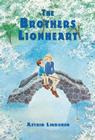 The other book that came to mind for me on this topic is a very different one, a chapter book for older readers about a pair of brothers, aged 10 and 13, who embark on a saga-like adventure after death. The Brothers Lionheart was written by Astrid Lindgren, of Pippi Longstocking fame, though it bears little resemblance in tone to its more famous cousin. The narrator, Karl, is a terminally ill 10-year-old boy; his older brother Jonathan is strong, smart, and brave. Karl learns at the very beginning of the book that he is about to die, and Jonathan tries to reassure him by explaining that after death, they will both go to Nangiyala, the land where sagas come from. In saving Karl from a fire, Jonathan unexpectedly dies first; Karl follows him, and the two brothers find themselves in an afterlife filled with adventure, battles of good against evil, and traitors. It is, and is not, the land they were hoping it to be.
I remember loving this book as a kid; tonight, rereading bits of it, I was immediately sucked in again. There is an immense seriousness to Karl's narration -- it's an adventure story, but a weighty one, and even the ending is not easy or happy. The Brothers Lionheart, too, makes me itch a little uncomfortably, but in a productive kind of way. It's a vision of the afterlife which, I'm sure, will spark all kinds of interesting conversation down the road.
Love, Annie
I'm so sorry the Comment Challenge happened when I was ostriched in my end-of-term work. Maybe I'll have to challenge myself unofficially during summer vacation.
The books you and Denise have been talking about sound extraordinary and powerful, and are certainly some that I will want to read with Eleanor and Isabel when they get a little older. War and slavery and the terrible things people do to one another are certainly tough topics to broach with kids; I know there are many difficult conversations ahead.
Right now, for me, the issues that are looming large and difficult are those of death, religion, and the afterlife. The Christmas season brought with it a first-time awareness on Eleanor's part of the story of Jesus, and there were plenty of nativity scenes in our neighborhood for her to notice ("Look! It's Baby Jesus!"). As you know, I come from a non-religious family. While I want my kids to be exposed to and understand various religious traditions and beliefs, I'm not teaching them that one religion is the right path, or that I, or anyone, knows what happens after we die. Sometimes I'm sorry I don't have this certainty, and can't pass it on to them.
Our conversations about death have stemmed sometimes from books -- fairy tales in particular, where people are always dying and coming back to life -- and sometimes from real-life conversations. Eleanor understands, sort of, that my grandparents all died before she was born. Recently, we were talking about Grandma Ruth, and I said I missed her, and Eleanor said, "That's okay, Mommy. You'll get another grandma." and I had to explain that no, unlike in so many stories, death is permanent.
Last weekend at my parents' house, Eleanor wanted me to read her one of the books from their kids' bookshelf (happily, they saved everything from Michael's and my childhood): The Clown of God, by Tomie dePaola. I had itchy I don't like that book feelings about it, but couldn't remember exactly why. The visit before, I put her off, but last weekend we sat down and read it.dePaola's drawings are, as always, beautiful and expressive. The Clown of God is a retelling of an old French legend about a poor boy who raises himself up by becoming a talented juggler and clown. He performs all over the country, making audiences happy with his act, which culminates with a rainbow of balls, the last a golden sun. His success fades as he ages, and he gets to a point where he stumbles, and the audience throws things at him. He quits juggling and wanders the country, begging, until he ends up at a monastery, where he sees a statue of Mary and baby Jesus being worshiped during a church service. After the rest of the people leave, the old clown puts on his makeup and juggles for the stone-faced baby statue. The show is amazing, best he's ever done. Then he drops dead. When a scandalized monk comes to see the sacrilege that is happening in the church, he finds the Jesus statue holding the golden ball, a smile on his face.
There's a lot going on here: death, the idea of doing something beautiful to make God happy, the question of why people would throw things at an old man. I'm not sure what aspect of the book left me with my initial negative feelings about it; it's quite sweet in a number of ways. But then there's the question of how Eleanor is taking this talk about God, coming from our house: is this a story to her like all the other stories we read? Or does the fact that her friends are starting to talk about their belief in God make religious stories read differently to her? (She has, in the last week, attached two necklaces to the headboard of her bed, and when I asked her why, she said, "To make God happy.")
The other book that came to mind for me on this topic is a very different one, a chapter book for older readers about a pair of brothers, aged 10 and 13, who embark on a saga-like adventure after death. The Brothers Lionheart was written by Astrid Lindgren, of Pippi Longstocking fame, though it bears little resemblance in tone to its more famous cousin. The narrator, Karl, is a terminally ill 10-year-old boy; his older brother Jonathan is strong, smart, and brave. Karl learns at the very beginning of the book that he is about to die, and Jonathan tries to reassure him by explaining that after death, they will both go to Nangiyala, the land where sagas come from. In saving Karl from a fire, Jonathan unexpectedly dies first; Karl follows him, and the two brothers find themselves in an afterlife filled with adventure, battles of good against evil, and traitors. It is, and is not, the land they were hoping it to be. I remember loving this book as a kid; tonight, rereading bits of it, I was immediately sucked in again. There is an immense seriousness to Karl's narration -- it's an adventure story, but a weighty one, and even the ending is not easy or happy. The Brothers Lionheart, too, makes me itch a little uncomfortably, but in a productive kind of way. It's a vision of the afterlife which, I'm sure, will spark all kinds of interesting conversation down the road.
Love, Annie
Wednesday, January 26, 2011
Tough topics, good books
Dear Annie,
Today was the last day of the comment challenge. I have to confess I didn't get near 100 posts -- more like 28 or 30. But it was quite interesting, I found a number of blogs I really like, and I've developed a bit of a commenting habit. A good experience all around. And the folks over at Mother Reader and LeeWind who organized it posted this amazing graphic of all the participants. Look closely: we're there:

Thank you so much to Denise for her wonderful Picture Books that Raise Social Awareness post. Such a great topic! And Denise, you sound like such a fantastic teacher.
As Denise showed, there are a number of excellent picture books out there on some pretty heavy issues. My experience selling books is that a large majority of kids and their grownups tend to reject all picture books -- no matter what the topic -- if the child has progressed to being able to read chapter books on his/her own. By around second grade -- eight or so years old -- picture books which tell a story are seen as something for younger readers. Schools have a huge advantage in being able to keep kids engaged in picture books -- especially if they're doing it in the kind of creative ways that Denise is using.

 One of the heavier subjects picture books help to introduce to younger kids is slavery. Most of the slavery books for young children tend to focus on the heroic narrative. There are some wonderful stories about the Underground Railroad, Harriet Tubman, and dramatic escapes. I'm quite partial to
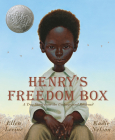
Henry's Freedom Box by Ellen Levine, illustrated by the amazing Kadir Nelson. It's the true story of Henry Brown, a slave in Richmond, Virginia who, with the help of two other men, was closed into a wooden crate and mailed to Philadelphia. The trip took 27 hours, and he arrived safely. For a good deal of the time the This End Up sign was ignored, and Henry was upside down stuck in the box (see picture). Two men on the ship carrying the box eventually put it right side up, going through a series of moves wonderfully drawn by Nelson. The book opens long before the escape, with the young Henry being taken from his mother, and later Henry's wife and children are sold away, both horribly traumatic events.
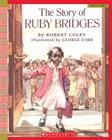
As Denise points out, the civil rights movement is another way to introduce injustice to younger ones. I think of A Wreath for Emmett Till as a poetry book for much older kids, given its horrific subject. The younger Freedom Summer, which Denise also writes about, is by Deborah Wiles, whom I've mentioned more than once in this blog as the author of Countdown. Good writer. There was a period when Mona was 5 or 6 when she became fascinated with The Story of Ruby Bridges by Robert Coles. It's the true story of the first black child to go to a previously all-white school in New Orleans. The white families all pulled their kids out of the school, so every day for months this incredibly brave girl, flanked by armed federal marshalls, walked through a crowd of screaming whites and was the only child in her first grade class. Mona, who at 19 is immersed in issues of social justice, remembers the book fondly, and says she thinks she picked it out at a library because she was drawn to the picture of the girl on the cover. One can always wonder when the seeds of understanding and activism are first planted.
I feel like I could talk about a raft of books on tough topics, but it's not just the books, it's what surrounds the reading. Parents can explain more about why those crowds were yelling at Ruby Bridges; teachers can place a heroic escape in a bigger context. And when children are old enough to be in a school setting, they're more aware that there's a wider world out there, with people going through many different kinds of experiences.
I'm really looking forward to what you're thinking on this subject.
Love,
Deborah
Today was the last day of the comment challenge. I have to confess I didn't get near 100 posts -- more like 28 or 30. But it was quite interesting, I found a number of blogs I really like, and I've developed a bit of a commenting habit. A good experience all around. And the folks over at Mother Reader and LeeWind who organized it posted this amazing graphic of all the participants. Look closely: we're there:

Thank you so much to Denise for her wonderful Picture Books that Raise Social Awareness post. Such a great topic! And Denise, you sound like such a fantastic teacher.
As Denise showed, there are a number of excellent picture books out there on some pretty heavy issues. My experience selling books is that a large majority of kids and their grownups tend to reject all picture books -- no matter what the topic -- if the child has progressed to being able to read chapter books on his/her own. By around second grade -- eight or so years old -- picture books which tell a story are seen as something for younger readers. Schools have a huge advantage in being able to keep kids engaged in picture books -- especially if they're doing it in the kind of creative ways that Denise is using.
One of the heavier subjects picture books help to introduce to younger kids is slavery. Most of the slavery books for young children tend to focus on the heroic narrative. There are some wonderful stories about the Underground Railroad, Harriet Tubman, and dramatic escapes. I'm quite partial to Henry's Freedom Box by Ellen Levine, illustrated by the amazing Kadir Nelson. It's the true story of Henry Brown, a slave in Richmond, Virginia who, with the help of two other men, was closed into a wooden crate and mailed to Philadelphia. The trip took 27 hours, and he arrived safely. For a good deal of the time the This End Up sign was ignored, and Henry was upside down stuck in the box (see picture). Two men on the ship carrying the box eventually put it right side up, going through a series of moves wonderfully drawn by Nelson. The book opens long before the escape, with the young Henry being taken from his mother, and later Henry's wife and children are sold away, both horribly traumatic events.
As Denise points out, the civil rights movement is another way to introduce injustice to younger ones. I think of A Wreath for Emmett Till as a poetry book for much older kids, given its horrific subject. The younger Freedom Summer, which Denise also writes about, is by Deborah Wiles, whom I've mentioned more than once in this blog as the author of Countdown. Good writer. There was a period when Mona was 5 or 6 when she became fascinated with The Story of Ruby Bridges by Robert Coles. It's the true story of the first black child to go to a previously all-white school in New Orleans. The white families all pulled their kids out of the school, so every day for months this incredibly brave girl, flanked by armed federal marshalls, walked through a crowd of screaming whites and was the only child in her first grade class. Mona, who at 19 is immersed in issues of social justice, remembers the book fondly, and says she thinks she picked it out at a library because she was drawn to the picture of the girl on the cover. One can always wonder when the seeds of understanding and activism are first planted.
I feel like I could talk about a raft of books on tough topics, but it's not just the books, it's what surrounds the reading. Parents can explain more about why those crowds were yelling at Ruby Bridges; teachers can place a heroic escape in a bigger context. And when children are old enough to be in a school setting, they're more aware that there's a wider world out there, with people going through many different kinds of experiences.
I'm really looking forward to what you're thinking on this subject.
Love,
Deborah
Monday, January 24, 2011
Guest Blogger: Picture Books that Raise Social Awareness
Dear Aunt Debbie,
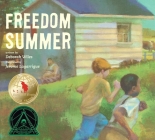 One of my favorite texts to teach is Freedom Summer, written by Deborah Wiles, illustrated by Jerome Lagarrigue. This story takes place in the American South in the 1960’s, right at the beginning of desegregation, and is about two young boys who are best friends: Joe who is “the color of the pale moths that dance around the porch light at night”, and John Henry who is “the color of browned butter.” They love to swim in the creek, shell butter beans, and eat ice pops together. One day, Joe’s Daddy says, “The town pool opens tomorrow to everybody under the sun, no matter what color.” That day, the boys run and race each other to the pool, but have to stop abruptly. Instead of gleaming, cool water in the pool, there is steaming asphalt. One of the most poignant illustrations is of the two boys sitting on the diving board facing the dark mass, their slumped backs facing the readers; they seem to be hovering over and surrounded by this dreary reality that as John Henry says, “White folks don’t want colored folks in their pool.” This moment, of course, changes them, and as the story progresses, they figure out a way to show their town that everyone under the sun really can unite and be harmonious.
 Another book about this time period that I find hauntingly beautiful is
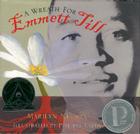
A Wreath for Emmett Till which is a heroic crown of sonnets written by Marilyn Nelson and illustrated by Philippe Lardy. In it, the sonnets bring together pieces of Till’s life and weave them into a wreath of symbolism, imagery, and heavy emotion. One of the sonnets that makes me gasp is written to Mamie Till Mobley, Emmett’s mother: “Your only child, a body thrown to bloat, / mother of sorrows, of justice denied. / Surely you must have thought of suicide, / seeing his gray flesh, chains around his throat. / Surely you didn’t know you would devote / the rest of your changed life to dignified / public remembrance of how Emmett died…” This book really makes it impossible to forget the brutal injustice of his death.
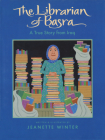 Moving to a different part of the world: a somewhat more uplifting book is The Librarian of Basra by Jeanette Winter which takes place during the invasion of Iraq in 2003. This is a true story about Alia Muhammad Baker who, with the help of some of her neighbors, rescued seventy percent of Basra’s library collection before the library was burned down due to bombs. Because she feared that harm would come to the library, she moved thousands of books to what seemed like safer places, her own home, other neighbor’s homes, her friend Anis’s restaurant.
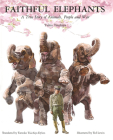
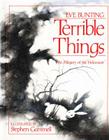 There are two other books on different wars that I read to my students: Terrible Things: An Allegory of the Holocaust by Eve Bunting, and Faithful Elephants: A True Story of Animals, People and War by Yukio Tsuchiya. Bunting’s book deals with how many people look the other way when terrible things happen. In this book, ominous shadows called the Terrible Things represent the Nazis and they come to the woods and take away different animals, first the birds, then the squirrels, and later the rabbits. Each time an animal is taken away, the other animals are glad and continue on with their lives; in the end, one small rabbit survives to tell others about what happened. The Tsuchiya book, like Winter’s book, is a non-fiction story; it tells of what happens to animals in a zoo in Tokyo during the attack of Japan at the end of World War II.
I love that video. Your life sounds extremely intense right now, too! Any chance there are some less-traumatic books in those boxes as well?
As I finish my portfolios, here's our final guest blogger (for the moment -- I hope we'll have more in the future). Denise is the mom of one of Eleanor's good friends, and she's also an amazing middle school English teacher. Here's her post:
Picture Books that Raise Social Awareness
I just finished teaching a unit to my eighth-grade English classes called: Picture Books on Social Issues. In this unit, I read a few mentor texts and guided the students in writing their own books on issues of personal importance. Just last weekend, I read and graded all 85 of their picture books (ahhh… what a relief… now I can pay more attention to my two biological children) which they wrote and illustrated themselves. Some wrote Seussish, rhyming stories with invented creatures, others historical fiction about the Great Depression and the Armenian Genocide, and others wrote passionate allegories about bullying, peer pressure, and animal abuse. As a culminating activity, my students will be reading their books to students at a nearby elementary school.
One of my favorite texts to teach is Freedom Summer, written by Deborah Wiles, illustrated by Jerome Lagarrigue. This story takes place in the American South in the 1960’s, right at the beginning of desegregation, and is about two young boys who are best friends: Joe who is “the color of the pale moths that dance around the porch light at night”, and John Henry who is “the color of browned butter.” They love to swim in the creek, shell butter beans, and eat ice pops together. One day, Joe’s Daddy says, “The town pool opens tomorrow to everybody under the sun, no matter what color.” That day, the boys run and race each other to the pool, but have to stop abruptly. Instead of gleaming, cool water in the pool, there is steaming asphalt. One of the most poignant illustrations is of the two boys sitting on the diving board facing the dark mass, their slumped backs facing the readers; they seem to be hovering over and surrounded by this dreary reality that as John Henry says, “White folks don’t want colored folks in their pool.” This moment, of course, changes them, and as the story progresses, they figure out a way to show their town that everyone under the sun really can unite and be harmonious. Another book about this time period that I find hauntingly beautiful is A Wreath for Emmett Till which is a heroic crown of sonnets written by Marilyn Nelson and illustrated by Philippe Lardy. In it, the sonnets bring together pieces of Till’s life and weave them into a wreath of symbolism, imagery, and heavy emotion. One of the sonnets that makes me gasp is written to Mamie Till Mobley, Emmett’s mother: “Your only child, a body thrown to bloat, / mother of sorrows, of justice denied. / Surely you must have thought of suicide, / seeing his gray flesh, chains around his throat. / Surely you didn’t know you would devote / the rest of your changed life to dignified / public remembrance of how Emmett died…” This book really makes it impossible to forget the brutal injustice of his death.
Moving to a different part of the world: a somewhat more uplifting book is The Librarian of Basra by Jeanette Winter which takes place during the invasion of Iraq in 2003. This is a true story about Alia Muhammad Baker who, with the help of some of her neighbors, rescued seventy percent of Basra’s library collection before the library was burned down due to bombs. Because she feared that harm would come to the library, she moved thousands of books to what seemed like safer places, her own home, other neighbor’s homes, her friend Anis’s restaurant. There are two other books on different wars that I read to my students: Terrible Things: An Allegory of the Holocaust by Eve Bunting, and Faithful Elephants: A True Story of Animals, People and War by Yukio Tsuchiya. Bunting’s book deals with how many people look the other way when terrible things happen. In this book, ominous shadows called the Terrible Things represent the Nazis and they come to the woods and take away different animals, first the birds, then the squirrels, and later the rabbits. Each time an animal is taken away, the other animals are glad and continue on with their lives; in the end, one small rabbit survives to tell others about what happened. The Tsuchiya book, like Winter’s book, is a non-fiction story; it tells of what happens to animals in a zoo in Tokyo during the attack of Japan at the end of World War II.These books lead to important discussions in my classes and sometimes bring about tears, especially Faithful Elephants. I think they show significant lessons about the world, but I wonder at what age I could read these books to my own children. I do think reading picture books can help us raise more compassionate, aware, and tolerant individuals, though at what point do I teach my own children about lynching and the Holocaust?
I have some thoughts about this, which I'll get to on Friday. You?
Love, Annie
Sunday, January 23, 2011
Book Fog
Dear Annie,
It's good to have you back for a bit. I keep romping through kidlit blogs -- much fun. Here's my latest discovery: the first entry in a make-a-90-second-video-summarizing-a-Newbery-winner:
Newberys of course make me think about what books are good and how people -- be they judges or book buyers or good ol' readers -- can distinguish the good from the average.
Right now, within eight feet of where I'm sitting, I have nine boxes full of bound galleys: paperback advance versions of chapter books which will be published between now and September. I've already ordered most of the books coming out in the next three to four months, but right now it's summer ordering season. I meet with sales reps from one or two publishers every week for the next six or so weeks. I get anywhere from ten to 30 galleys from each company. So there's a lot of triage before I even start reading.
We don't have a large Young Adult section, so the first thing I eliminate is usually books with photographs of shapely "women in big dresses," as one of my reps calls them. If these women's heads are visible (sometimes we just get bodies), they have long waving tresses. Forget 'em. Then there are the tiny little early chapter books which are being released as hardcovers for $16.99. There has to be something exceptional about those for me to consider them before their paperback stage. After that, it's a matter of reading the blurbs on the backs, occasionally getting some guidance from a sales rep, and then plunging in.
Before I had this job, I felt it was a point of honor to finish reading whatever I started. That's just not possible now, although I frequently put down a book thinking, yes, I should come back to this. Sometimes I do. This week, I've read parts of:
But it always reassures me when I find a really good one --- makes me feel like I still can think.
Love,
Deborah
It's good to have you back for a bit. I keep romping through kidlit blogs -- much fun. Here's my latest discovery: the first entry in a make-a-90-second-video-summarizing-a-Newbery-winner:
Newberys of course make me think about what books are good and how people -- be they judges or book buyers or good ol' readers -- can distinguish the good from the average.
Right now, within eight feet of where I'm sitting, I have nine boxes full of bound galleys: paperback advance versions of chapter books which will be published between now and September. I've already ordered most of the books coming out in the next three to four months, but right now it's summer ordering season. I meet with sales reps from one or two publishers every week for the next six or so weeks. I get anywhere from ten to 30 galleys from each company. So there's a lot of triage before I even start reading.
We don't have a large Young Adult section, so the first thing I eliminate is usually books with photographs of shapely "women in big dresses," as one of my reps calls them. If these women's heads are visible (sometimes we just get bodies), they have long waving tresses. Forget 'em. Then there are the tiny little early chapter books which are being released as hardcovers for $16.99. There has to be something exceptional about those for me to consider them before their paperback stage. After that, it's a matter of reading the blurbs on the backs, occasionally getting some guidance from a sales rep, and then plunging in.
Before I had this job, I felt it was a point of honor to finish reading whatever I started. That's just not possible now, although I frequently put down a book thinking, yes, I should come back to this. Sometimes I do. This week, I've read parts of:
- An R.L. Stine book about a boy who keeps waking up on the first day of school, and each iteration becomes more creepy and violent. It's the first time, I confess, that I've read RLS. Your mother used to have good things to say about Goosebumps for some inexperienced readers.
- A book about a boy abandoned in Mt. Desert Island by his mentally ill mother. He decides to make it home without involving the authorities. Sounds a little like a book I was dissing a few weeks ago, but as of halfway through it feels more believable.
- Here's the start of another's blurb: 'A snowy winter's night. Three small children are chased from their home by the forces of a merciless darkness..." I'm partway into it. Evil orphanages. Time travel. Missing parents. Okay so far.
- An unhappy young Yankees fan with an abusive father who's just moved from Long Island to a small town in upstate New York is going to find meaning in the prints of John James Audubon. I'm looking forward to finishing this one -- it's by Gary Schmidt whose work I like. Could be quite good.
- A YA book about a high school runner who loses a leg in a car accident and has to learn to find happiness in her life again. This one's out already -- the precis makes it sound worse than it actually might be.
- A graphic novel about a ghost who tries to goad a middle school girl into being a budding mean girl.
- A graphic novel about a girl who's an artist but too shy to show her art to anyone.
- I've also listened to a new recording of Are You There God, It's Me Margaret -- made it all the way through that one.
But it always reassures me when I find a really good one --- makes me feel like I still can think.
Love,
Deborah
Friday, January 21, 2011
Moon Man, Moon Kitten
Dear Aunt Debbie,
I'm still plugging away at my grading, and on Monday there will be one more fabulous guest blogger, but tonight I'm giving the portfolios a rest in order to jump back into the conversation. Your last post about moon books made me think immediately about two I love, one from my own childhood, and one newer.
 Moon Man, by Tomi Ungerer, is a strange and wonderful book. I haven't yet read it with Eleanor, but I remember reading it often as a kid, and loving the glowing quality of Ungerer's illustrations. It's the story of the man in the moon, who loves to watch people on earth dancing, and one night hitches a ride on a comet and falls to earth. Ungerer is fairly political -- the moon man's landing causes all kinds of trouble, and he's hunted down and put in jail for a little while, but eventually (through his waning-moon abilities) escapes, gets to dance, and gets back home. So it's not for the youngest readers, but it's quite lovely. I also remember adoring Ungerer's Crictor, about a friendly French boa constrictor, and Rufus, about a bat who falls in love with movies and turns himself briefly technicolor. (Sadly, this one is out of print, though several of Ungerer's childrens' books have recently been reprinted.)
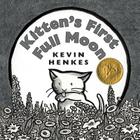 For younger kids, I'm back to Kevin Henkes and his book Kitten's First Full Moon. The moon is full, and the kitten mistakes it for a bowl of milk, just too high to reach, then makes the same mistake with the moon's reflection in a lake. It's a really sweet book (Jeff was surprised a few days ago to realize that Henkes is the same sarcastic man who wrote the Lilly books), and the black/white/gray drawings are luminous.
Then of course there's Thurber's Many Moons, which you've written about -- who knew there were so many lovely moon books?
We saw the full moon on the way home on Wednesday, by the way. It made Isabel howl.
Love, Annie
I'm still plugging away at my grading, and on Monday there will be one more fabulous guest blogger, but tonight I'm giving the portfolios a rest in order to jump back into the conversation. Your last post about moon books made me think immediately about two I love, one from my own childhood, and one newer.
 Moon Man, by Tomi Ungerer, is a strange and wonderful book. I haven't yet read it with Eleanor, but I remember reading it often as a kid, and loving the glowing quality of Ungerer's illustrations. It's the story of the man in the moon, who loves to watch people on earth dancing, and one night hitches a ride on a comet and falls to earth. Ungerer is fairly political -- the moon man's landing causes all kinds of trouble, and he's hunted down and put in jail for a little while, but eventually (through his waning-moon abilities) escapes, gets to dance, and gets back home. So it's not for the youngest readers, but it's quite lovely. I also remember adoring Ungerer's Crictor, about a friendly French boa constrictor, and Rufus, about a bat who falls in love with movies and turns himself briefly technicolor. (Sadly, this one is out of print, though several of Ungerer's childrens' books have recently been reprinted.)For younger kids, I'm back to Kevin Henkes and his book Kitten's First Full Moon. The moon is full, and the kitten mistakes it for a bowl of milk, just too high to reach, then makes the same mistake with the moon's reflection in a lake. It's a really sweet book (Jeff was surprised a few days ago to realize that Henkes is the same sarcastic man who wrote the Lilly books), and the black/white/gray drawings are luminous.
Then of course there's Thurber's Many Moons, which you've written about -- who knew there were so many lovely moon books?
We saw the full moon on the way home on Wednesday, by the way. It made Isabel howl.
Love, Annie
Wednesday, January 19, 2011
The Moon
Dear Annie,
Well, I miss your posts, but I must say you have an interesting and literate group of friends. I'm really enjoying these guest posts.
Holly longs for a chance to read fiction with Ian, but I'm quite impressed with the non-fiction books that interest him -- including longer complicated ones like the H.A. Rey Find the Constellations. Rey, best known as the creator of Curious George, has another astronomy book called The Stars: A New Way to See Them, written in 1952, but revised since the Pluto demotion. I wonder if Ian's found that one, and what he thinks of it.
Holly, it's lovely that you've managed to find books that engage Ian, and that you find appealing too. Both generations enjoying reading together is the best. Occasionally a mom will come into the store and complain that her child -- usually, but not always, her son -- "isn't a reader." Oh, he can read, she'll say, he reads science books all the time, but he's not reading fiction. Many of us for whom reading fiction is central to who we are sometimes overlook the fact that non-fiction books are reading too, with plenty of chances to process what's written. And having a child who loves to be read to means he'll grow up caring about books -- and who knows where his adult (or six year-old or 12 year-old) taste will take him.
 I'm a bit of a star gazer myself, but have never seen the Andromeda galaxy, although now I intend to search for it next summer in Maine where the Milky Way shines brightly. I thought I'd offer Ian a few books about the celestial body he can see: the moon. There's a series called Let's-Read-and-Find-Out-Science which has dozens of books aimed at the early elementary grades but very read-aloud friendly for the younger crowd. The topics include plants and animals, human body, weather, dinosaurs, earth science, and space. I once met a mom and her first grade daughter who were working their way through all the books, which could take a while.
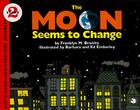
The Moon Seems to Change gives the basics of sun-moon-earth alignments, and also talks about what you'll see in the sky, and where different-shaped moons will be. When the illustrations include people looking at the sky, the backgrounds are usually urban. It gives a fair amount of information, with no bad puns.
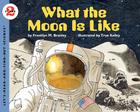
What the Moon is Like gets you up to the lunar surface There's lots of description of what it looks like, and what the astronauts did when they were there.
 I thought I'd sneak in a little moon fiction here, too, since we're on the subject of lunar travel. Back in my first post, I talked about
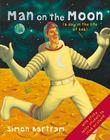
Man on the Moon (a day in the life of Bob), by Simon Bartram. It's the story of a man who commutes to the moon to work every day. His job is to clean up the moon (all that dust!) and to tell the tourists that there are no such things as aliens. Even as he's saying that, of course, cheerful little green men with antennae are popping up in the background in every picture (note green guy under Bob's elbow on the cover). He remains happily oblivious through the whole book.

Jimmy Zangwow's Out-of-This-World Moon-Pie Adventure by Tony DiTerlizzi, as the title promises, offers a little more excitement. Jimmy flies his jalopy to the crescent moon before supper because he's longing for a moon pie. After some negotiation, the Man in the Moon gives him a thousand pies ("Gadzooks!" says Jimmy, "A whole year's supply!"), but on his way home, Jimmy ends up crash-landing on Mars. He's met by 999 friendly little blue men, all of whom are hungry. And then a monster shows up. All gets resolved very cordially -- burps play a crucial role -- and Jimmy makes it home in time for supper. It's fun and the illustrations are lush and full of detail.
There's a full moon tonight, by the way. Didn't realize that until I wrote all this. Enjoy it.
Love,
Deborah
Well, I miss your posts, but I must say you have an interesting and literate group of friends. I'm really enjoying these guest posts.
Holly longs for a chance to read fiction with Ian, but I'm quite impressed with the non-fiction books that interest him -- including longer complicated ones like the H.A. Rey Find the Constellations. Rey, best known as the creator of Curious George, has another astronomy book called The Stars: A New Way to See Them, written in 1952, but revised since the Pluto demotion. I wonder if Ian's found that one, and what he thinks of it.
Holly, it's lovely that you've managed to find books that engage Ian, and that you find appealing too. Both generations enjoying reading together is the best. Occasionally a mom will come into the store and complain that her child -- usually, but not always, her son -- "isn't a reader." Oh, he can read, she'll say, he reads science books all the time, but he's not reading fiction. Many of us for whom reading fiction is central to who we are sometimes overlook the fact that non-fiction books are reading too, with plenty of chances to process what's written. And having a child who loves to be read to means he'll grow up caring about books -- and who knows where his adult (or six year-old or 12 year-old) taste will take him.
The Moon Seems to Change gives the basics of sun-moon-earth alignments, and also talks about what you'll see in the sky, and where different-shaped moons will be. When the illustrations include people looking at the sky, the backgrounds are usually urban. It gives a fair amount of information, with no bad puns.
What the Moon is Like gets you up to the lunar surface There's lots of description of what it looks like, and what the astronauts did when they were there.
There is no air on the moon -- no dust, water droplets, or molecules in the sky. There is nothing in the sky to be lighted, so it is always black.From the moon, people can see the stars at night, just as we can from Earth. But they can see the stars in daytime, too. They can see stars in the black sky when the sun is shining.
I thought I'd sneak in a little moon fiction here, too, since we're on the subject of lunar travel. Back in my first post, I talked about Man on the Moon (a day in the life of Bob), by Simon Bartram. It's the story of a man who commutes to the moon to work every day. His job is to clean up the moon (all that dust!) and to tell the tourists that there are no such things as aliens. Even as he's saying that, of course, cheerful little green men with antennae are popping up in the background in every picture (note green guy under Bob's elbow on the cover). He remains happily oblivious through the whole book.
Jimmy Zangwow's Out-of-This-World Moon-Pie Adventure by Tony DiTerlizzi, as the title promises, offers a little more excitement. Jimmy flies his jalopy to the crescent moon before supper because he's longing for a moon pie. After some negotiation, the Man in the Moon gives him a thousand pies ("Gadzooks!" says Jimmy, "A whole year's supply!"), but on his way home, Jimmy ends up crash-landing on Mars. He's met by 999 friendly little blue men, all of whom are hungry. And then a monster shows up. All gets resolved very cordially -- burps play a crucial role -- and Jimmy makes it home in time for supper. It's fun and the illustrations are lush and full of detail.
There's a full moon tonight, by the way. Didn't realize that until I wrote all this. Enjoy it.
Love,
Deborah
Subscribe to:
Posts (Atom)