In which Annie (high school teacher, mother of two young girls and a younger boy) and her aunt Deborah (children's bookseller, mother of two young women in their 20s) discuss children's books and come up with annotated lists.

Showing posts with label Schmidt. Show all posts

Wednesday, October 10, 2012

Which shelf?

Dear Annie,

A book just arrived at the store that's posing an unusual question: on what shelf does it belong?
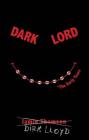
Dark Lord: The Early Years
by Jamie Thomson opens with the main character falling onto a suburban parking lot.  He calls for his lieutenant, who doesn't come;  he discovers his iron-taloned Gauntlets of Ineluctable Destruction have disappeared: he has "pink, pallid and pudgy" soft hands.  Police officers approach, reassuring him that an ambulance is on the way.  He tries to zap them -- puny humans! -- with various spells, all of them ineffective.
   "What's your name, kid?" asked Officer Johnson.
   The kid, for that's what he looked like, thought for a moment.  He couldn't remember his name.  No matter how hard he tried, he just couldn't.  But he could remember what he was, and his primary  title.
   "Daa . . . (cough, cough).  I am the Dark Lord," he said.  To his horror, he realized his voice really did sound like some kind of do-gooding Elf woman or a human boy-child!
   "Dirk?  Did you say Dirk?"
   "No! No!  Dark!  Dark Lord."  But his voice came out wrong, weak and raspy and even more boyish than before.
   "Dirk, eh? Dirk Lloyd? Where are your mom and dad, Dirk?  Have you been hit by a car?  Are you lost, son?"
   "Mom and dad?" he sputtered, outraged.  "I don't have parents, you curs -- I am the Incarnation of Evil! The World Burner! The Dark One, to name but a few of my titles!  I'm not someone's little boy, you fools!"
   "These computer games.  It's an obsession at their age," said Officer Johnson.
Dirk eventually ends up living in a foster home, and in counseling.  He reluctantly makes a few friends in school -- and the story goes on to an excellent ending (stay tuned for book 2).  Throughout the book, one tries to figure out if this kid is the victim of a concussion and too many video games, or if what we're reading here is an interplanetary fantasy.  Needless to say, I'm not going to give it away here.

So here's my problem.  Our middle-grade fiction at the store is divided into two sections: one is fantasy and science fiction; the other is more realistic fiction.  If the ending shows that Dirk is a regular kid with delusions, it should live on the realistic shelves.  If instead he really is the Dark Lord of another planet, well, it's fantasy.   And if I display it on either side of the aisle, I'm giving away the secret of the book.  Right now it's on a new-arrivals display, so I'm sidestepping the question.  But sooner or later, I'll need a plan.
This theme -- mixing up florid constructs of fantasy worlds with everyday life -- is less ambiguously (but more artfully) presented in
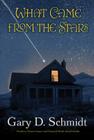
What Came from the Stars
by Gary Schmidt, author of Okay for Now.  I'm quite fond of his books, and this one is definitely a departure.  It opens in italics, in a world sounding vaguely Middle Earth-ish:
   So the Valorim came to know that their last days were upon them.  The Reced was doomed, and the Ethelim they had loved well and guarded long would fall under the sharp trunco of the faceless O'Mondim and the traitors who led them.  The Valorim looked down from the  high walls of the Reced and knew they would find no mercy in the dark fury of the O'Mondim massed below -- none for all they had loved.
So they forge a magic chain, containing all the knowledge of the Valorim, and toss it into their sky, and on up into space.  It lands in the lunchbox of Tommy Pepper of Plymouth, Massachusetts, planet Earth, on his 12th birthday.  It's cool looking, he puts it on, and he starts knowing things, like that a hanorah is a kind of horn: "You play it after a victory in battle, and also after Second Sunrise on the first day of the new year."  He's met with the same kind of skepticism that greeted Dirk Lloyd.
 
What Came from the Stars packs more emotional punch, though.  Tommy and his family are still reeling from the  blow of his mother's death.  Yes, it's another dead mother book, but the feelings are central to the plot; it isn't just a convenient way to remove an authority figure.  Evil developers are trying to change the Plymouth seashore.  Realistic chapters alternate with the high fantasy of the world of the Valorim, where underground resistance to the conquerors is growing.  Bad guys are sent across the universe to find the chain, and the resistance sends a virtuous young warrior to stop him.  The reader really cares about both worlds, and when Tommy and Ealgar join forces, we long for things to be right both in Plymouth and in the home of the Valorim.

And I know which side of the aisle this one belongs on.

Love,

Deborah

Sunday, July 15, 2012

What's this book about?

Dear Annie,

It's cheering that Eleanor is so physically involved in reading: feelings fizzing out through her muscles.  And I also appreciate your pointing out Nancy Drew's no-nonsense competence -- not just at buying dresses, but also at repairing motors and driving and solving crimes.

I've recently had an odd experience with a book about girls who are trying to be competent in their lives, but who in some ways are in way over their heads.   I read
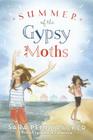
Summer of the Gypsy Moths
by Sara Pennypacker as a sample book and wrestled for a while with the question of whether I would order it for our stores (I did).  The author wrote a wildly popular early chapter book series about a character named Clementine -- one of those high-energy engaging girls whose realistic exploits keep expanding into more and more sequels.

Summer of the Gypsy Moths is aimed at older kids -- although the publicity for it says it's for 8 to 12 year-olds.  Last week the Washington Post kids' page ran a lyrical description of the book -- here are a few excerpts:
   Do you have a summer tradition? A place you go on vacation every year? A special spot for ice cream after dinner? A friend whom you get to see only when the days are warm, extra long and marked by endless hours of little to do?
   Sara Pennypacker’s book about two girls spending the summer with a relative on Massachusetts’s Cape Cod is about those types of traditions. . . .
   That’s just what author Pennypacker was going for in writing her novel. She said that she had a special summer friendship with a girl named Sonja on which she could model the relationship of Angel and Stella. “In the summers we’d hang out every single day, then on Labor Day we’d each go back to our real homes. The next summer, there we’d be, every single day as if the school year had never happened.”
The description creates expectations of warm friendships and magical days at the beach.  But it doesn't correlate at all with the book.  

To talk about the book, and to explain my uneasiness with the description, it's necessary to give away a major plot element in the next paragraph.  So be warned.

I would change the review's second paragraph to read, "about two girls spending the summer with the decomposing body of a relative...."  Kinda changes the lyrical summer vacation, huh?  Both girls have been sent to live with Stella's great-aunt because their families have become scarily dysfunctional.  Fairly early in the book, the woman dies, apparently of natural causes.  Rather than open themselves to the unknowns of the social services system, they instead bury her in the back yard, and take on her responsibilities as caretaker for a group of cottages.  As the body decomposes and starts to smell, they come up with increasingly unbelievable stories to cover for the situation.  Pennypacker explores the relationship between the girls well, but it's all based on a grisly and slightly preposterous plot element.

I don't know why the Post writer wrote what she did -- one of my co-workers is convinced she couldn't have read the book.  I spoke with three adults that week who came to the store to buy the lovely book described in the paper.  What should a bookseller do in that situation?  I basically said what's written above, but it turns a more complex book into its One Awful Thing.  Kind of like saying that The Hunger Games is about teenagers killing each other.  Well, yes, but there's a lot more to it.   The wonderful Gary Schmidt wrote a publicity blurb for Summer of the Gypsy Moths which for me captures what the author was trying to do:
 For Stella and for Angel, a terrible secret lies hidden beneath the pumpkin patch. But a more terrible secret lies hidden in the deeper depths of their hearts—the secret that must not be uttered: They may be absolutely and completely alone. Their journey in this grace-filled novel is a journey toward making that deeper secret a lie. Beneath the comedy and the suspense and the horror and the wit of this remarkable read lies the deepest secret of all: that we can learn to love each other.
He's created realistic expectations for the reader -- you know this book is different from Pennypacker's lighter fare.  He's a bit more enthusiastic than I am, but his reasons for liking it are wonderfully engaging.  And he doesn't give anything away.

Love,

Deborah

Thursday, February 3, 2011

Yes, but

Dear Annie,

I'm so glad you and I have the same take on Ladybug girl.  One wants it to be better because the illustrations are so engaging and she has a slightly tough feel to her.  And it's not, but it's still okay.  Ladybug Girl and Bumblebee Boy is my favorite too.  Books like that, which have a message but still have a bit of personality, are why the world doesn't need the Berenstain Bears, to get back to an old thread.

I'm going to defer the discussion of death books -- must go ransack my shelves for some good ones first.

I'm in the thick of meetings with sales reps to order books for the summer right now.  And I've just read the first Seriously Good (Although Flawed) book of the year.  I'm putting it on my might-win-an-award list -- although we know how bad my record is on those predictions.  It's
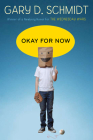
Okay for Now
by Gary Schmidt. It's due out in mid-April.  (Note: spoilers throughout the following paragraphs.)  Schmidt's a lovely writer: this book is full of very special individuals. There are a few old chestnuts among the characters, but the narrator, Doug Swieteck, is wonderfully done.  The book follows him through his eighth grade year: it's 1968 and his family moves to a small town in upstate New York.  His older brother is an aspiring hood who steals his stuff and beats him up.  His father is abusive to the entire family and the whole town is suspicious of the brothers.  Two adults help Doug discover some of the joys of the world: a science teacher who figures out that he can't really read, and a librarian who introduces him to the prints of John James Audubon.

Underneath the glass was this book.  A huge book.  A huge, huge book.  Its pages were longer than a good-size baseball bat.  I'm not lying.  And on the whole page, there was only one picture.  Of a bird.
     I couldn't take my eyes off it.
     He was all alone, and he looked like he was falling out of the sky and into this cold green sea.  His wings were back, his tail feathers were back, and his neck was pulled around as if he were trying to turn but couldn't.  His eye was round and bright and afraid, and his beak was open a little bit, probably because he was trying to suck in some air before he crashed into the water.  The sky around him was dark, like the air was too heavy to fly in.
     This bird was falling and there wasn't a single thing in the world that cared at all.
     It was the most terrifying picture I had ever seen.
     The most beautiful.

He starts drawing copies of the Audubon prints.  The nasty brother rips one up once, which he takes in stride because he's used to being pushed around and abused.  So when one discovers the deep hostility of his father's abuse -- and Doug's emotional scars -- it really hits.

There are funny and touching moments too.  He learns to read and then tries out his skills on the kids he babysits for.  I figured you'd appreciate this line, Annie:
And it wasn't like you could read to all of them at once, or even three of them, or two.  It was five kids, five books.
     This takes a long time.  I'm not lying.
     But I didn't care, because I figured it all out, thanks to Miss Cowper's County Literacy Unit.
     I figured out Sam-I-Am for Phronsie.
     I figured out Circus McGurkus for Davie.
     I figured out Jack, Kack, Lack, Mack, Nack, Ouack, Pack, and Quack for Joel.
     I figured out Andy and the thorn in the lion's paw for Polly.
     And I even figured out why Wilbur is one terrific pig for Ben.
     You know what this feels like, to figure all this out?
     Do you really know what it feels like?
Okay, so now I'm coming to the problematic part: the ending.  There are a lot of bad things that happen in among the good things.  But almost all of it gets resolved.  People change.  Those who can't communicate learn to listen to each other.  Young romance stays true.  The town's suspicions are dispelled.  Parents reconcile.  There's even the implication that the horrendous dad has turned a new leaf. 

I want to say, Yes, but...

This is a book aimed at 10 to 14 year-olds.  We don't need gritty realism throughout.  There's a lot to think about in this book, and the bad things people do to each other -- especially the bad stuff adults do to kids -- is harsh.  But it's well written:  one can imagine inhabiting that life.  But I just don't believe a father who's been uncommunicative and violent to his entire family is all of a sudden going to realize that kind of behavior is a bad thing and stop.  So how do we present the world to a ten year-old?  Look, there's bad stuff, some parents hit their kids.  Do we end on a more realistic but depressing note, saying that kind of parent isn't going to stop?  Or do we hand out a little hope with the bad news?  Schmidt opted for the hope.  I wish he'd found a more nuanced way to deal with it, but it's still a really good book.

Love,

Deborah