In which Annie (high school teacher, mother of two young girls and a younger boy) and her aunt Deborah (children's bookseller, mother of two young women in their 20s) discuss children's books and come up with annotated lists.

Showing posts with label R.J. Palacio. Show all posts

Thursday, October 10, 2013

Here comes the Rainbow

Dear Aunt Debbie,

Your latest box of gifts, which arrived recently for Isabel's birthday, contained a number of gems, including one which has become Will's favorite book.

I haven't yet written much about Will's taste in books: at close to 8 months old, he's mostly interested in slapping at them and trying to eat the corners.  But he's gotten to that excellent baby stage where he thinks pictures of other babies are awesome.  We're hitting some of our favorites in this category, of course: Baby, Baby; I Love Colors; What's on My Head?
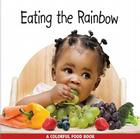

Eating the Rainbow
 is another good board book to engage this phase.  It's full of bright colors, adorable multi-racial babies, and healthy eating suggestions -- what's not to like?  Each two-page spread contains a picture of a baby eating a fruit or vegetable, with several other food items of the same color laid out on the facing page. It's good for baby faces now, and will be good for color and food recognition later, as well as supporting the idea that fruits and vegetables are good things to eat.  Will looks at these babies and laughs out loud.


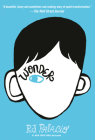
In my free time, I've been reading some really good YA fiction.  I finally got Wonder from the library, and devoured it.  What a good book -- the kind where the characters feel immediately like real people, and start to inhabit your thoughts throughout the day.

Poking around online, I came across a story that led me to Eleanor & Park, a YA novel by Rainbow Rowell.  I'd never heard of Rowell, but after reading the book, I've put library holds on the two other books she has out, and will be watching for her new work.

Eleanor & Park is a YA misfit love story, set in 1986 in Omaha, Nebraska.  Eleanor is big and red-headed and poor, living with her mom, siblings, and abusive stepdad in a tiny house.  At school, she's bullied quite badly.  Park is half-Korean, into comics and punk music, popular enough but definitely other.  They fall in love, and Rowell writes about it in such specific, evocative detail that it made me feel like I was 15 again.  Holding hands on the school bus is the most intense of experiences:

As soon as he touched her, he wondered how he'd gone this long without doing it.  He rubbed his thumb through her palm and up her fingers, and was aware of her every breath.  

Park had held hands with girls before.  Girls at Skateland.  A girl at the ninth-grade dance last year. (They'd kissed while they waited for her dad to pick them up.) He'd even held Tina's hand, back when they "went" together in the sixth grade.

And always before, it had been fine.  Not much different from holding Josh's hand when they were little kids crossing the street.  Or holding his grandma's hand when she took him to church.  Maybe a little sweatier, a little more awkward.

When he'd kissed that girl last year, with his mouth dry and his eyes mostly open, Park had wondered if maybe there was something wrong with him.

He'd even wondered -- seriously, while he was kissing her, he'd wondered this -- whether he might be gay.  Except he didn't feel like kissing any guys either.  And if he thought about She-Hulk or Storm (instead of this girl, Dawn), the kissing got a lot better.

Maybe I'm not attracted to real girls, he'd thought at the time.  Maybe I'm some sort of perverted cartoon-sexual.

Or maybe, he thought now, he just didn't recognize all those other girls.  The way a computer drive will spit out a disk if it doesn't recognize the formatting.

When he touched Eleanor's hand, he recognized her.  He knew.

It's a gripping read, moving and real.  Like Wonder, Eleanor & Park doesn't shy away from the complicated ways that teenagers are both affectionate with and cruel to each other, or from the horrendous circumstances that many kids grow up through.

So of course it's been censored.  Some high school librarians in Minnesota liked the book so much they offered it as a community read, and invited Rowell to speak.  Then a couple of parents got hold of the book and counted up the curse words in it (apparently without taking much else in as they went through) and decided that it was "dangerously obscene."  Here's Rainbow Rowell talking about it in a brief interview.

I'm no fan of censorship in any case, but here it seems particularly misguided.  Eleanor and Park are good kids, and the vast majority of the cursing in the book comes from Eleanor's stepfather and the kids who bully her -- it's language she and Park feel as abusive, and try to move away from.  Linda Holmes writes thoughtfully about this issue on her NPR blog, here.  This is the kind of book I hope Eleanor, Isabel, and Will will be reading when they're 15.

Love, Annie

Thursday, January 17, 2013

Placing my bets

Dear Annie,

A big thank you to Holly.  Her post offered two excellent elements in kids' literature: good adventure series for younger kids, and heroic rodents.  But the thing that made me happiest about the post is that I didn't know about either series.  I always love learning about new books from people who have been enjoying them.  Way to go, Holly and Ian.  It seems not that long ago that Ian was an exclusively-train guy.


In the world of bookselling, we're in the annual run-up to the American Library Association awards, coming on January 28.  The two biggest awards will be the Newbery and Caldecott medals -- for writing and illustration, respectively.

As I've pointed out before, in my 14 years of bookselling, I've had many favorite books, but I've never successfully predicted the winner of either medal.  Speculation about the awards is all over the place, as often happens.  This year, one book in each category has really stood out to me as the best .

I wrote about Wonder by R.J. Palacio a year ago, and I've been recommending it on almost a daily basis since then.  I've been hoping all year that it will win the Newbery.  Today, as she was leaving the toy store, a customer came over to the book section to tell me how much both she and her children had loved the book -- I'd sold it to her in the fall.  She says she's given it to other kids several times since then.  It's about kindness and cruelty and a fifth grader's struggle to be part of a school community when his severe facial deformities "make other ordinary kids run away screaming in playgrounds."  He's a great character.  And Palacio advocates for understanding and kindness without moralizing or sledgehammering her point.  It will make me very happy if this is the year I'm right.

And for the Caldecott, I'm hoping Sleep Like a Tiger, with words by Mary Logue and amazing illustrations by Pamela Zagarenski, gets the Caldecott for best illustration.  It was in your Christmas box o' books from me, so you know what I'm talking about.  An I-won't-go-to-sleep child is ever-so-gently cajoled into sleep by parents with infinite patience and imagination.  A while ago I had a lovely conversation with a customer who started talking about all the symbolism in the illustrations and how carefully they'd been planned out.

Given my track record, it could be that my advocacy of these books is the kiss of death.  We've been talking about doing a promo for the books on the store's Facebook page listing these two titles with the line, "The book lady's never predicted the awards right.  Will this be her year?"

I hope so.

Love,

Deborah

Sunday, January 8, 2012

Kindness

Dear Annie,

A friend's daughter enrolled in my girls' school in 7th grade and ended up hanging with Lizzie and her group of friends.  When my friend mentioned Anne's new crowd to a teacher, the teacher replied, "That's good -- they're all very kind."  The choice of words, although true, struck me as an unusual choice.  In the world of school social interaction, though, it was high praise indeed.

Wonder
, by R.J. Palacio, extends the spectrum of kindness and cruelty in the story of a fifth grader attending school for the first time.  It's not a story about middle school mean girls, but it's about wanting more kindness from strangers than one often gets.
I know I'm not an ordinary ten-year-old kid.  I mean, sure, I do ordinary things.  I eat ice cream.  I ride my bike.  I play ball.  I have an XBox.  Stuff like that makes me ordinary.  I guess.  And I feel ordinary.  Inside.  But I know ordinary kids don't make other ordinary kids run away screaming in playgrounds.  I know ordinary kids don't get stared at wherever they go....
   My name is August, by the way.  I won't describe what I look like.  Whatever you're thinking, it's probably worse.
Auggie was born with massive facial deformities, has gone through 27 surgeries, and still looks far from normal.  The description of his face comes out in small details throughout the book, building a full picture of his looks and his personality in parallel.  He's a great kid: very brave, very vulnerable, very kid-like.  Very observant:
   She had written her name, Ms. Petosa, on the chalkboard.  "Everybody find a seat, please.  Come in," she said to a couple of kids who had just come in the room.  "There's a seat there, and right there."
   She hadn't noticed me yet.
   "Now, the first thing I want everyone to do is stop talking and . . . "
   She noticed me.
   ". . . put your backpacks down and quiet down."
   She had only hesitated for a millionth of a second, but I could tell the moment she saw me.  Like I said: I'm used to it by now.
The book is due to be published next month, but I'm jumping the gun because it keeps kicking around in my thoughts.  It's narrated by Auggie and a number of other characters, including his fiercely loving but conflicted older sister, two of her friends, and other fifth graders.  One understands the allure of Halloween -- masks! anonymity! -- and the pain of being a freak among one's peers.  Some of the kids set a "rule" that anyone who touches Auggie will end up with "The Plague" if they don't wash their hands within 30 seconds.  A couple of kids befriend him, and they're the last to hear about it.  Other attempts at organized ostracism follow.

What makes Wonder work so well is that there are several characters whose actions range from simply treating Auggie as a regular kid, to confronting seriously hostile behavior.  Yet none of the good people is perfect.  Auggie's first true friend betrays him early on and has to win his way back.  His sister doesn't tell anyone in her new school about her brother -- she wants to savor an identity free of him.  When Auggie and Jack are getting along, they're far from model students and get scolded for acting up.  Fifth grade boys get into fights.  They cry.  The reader gets wrapped up in Auggie's slog through the school year, wanting him to have an easier time, being impressed with how he's growing up.  Then there's a horrifying incident with strangers which forces the entire school population to examine their feelings about the weird kid.

The ending is satisfying and impossible to get through dry-eyed.  The glow one feels at the end has to do with being glad that ordinary people act with courage and kindness.  And it doesn't even feel far-fetched.

Love,

Deborah